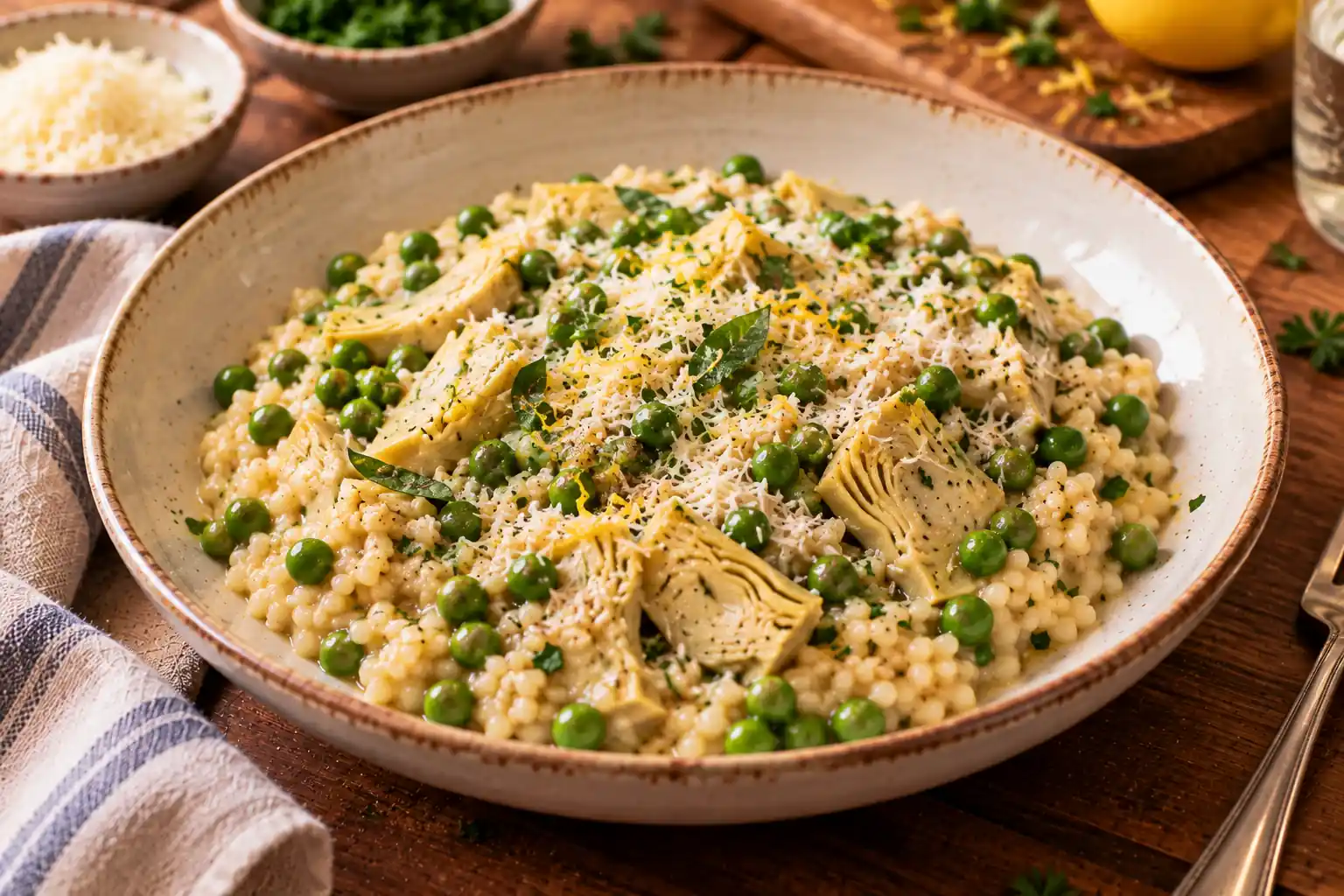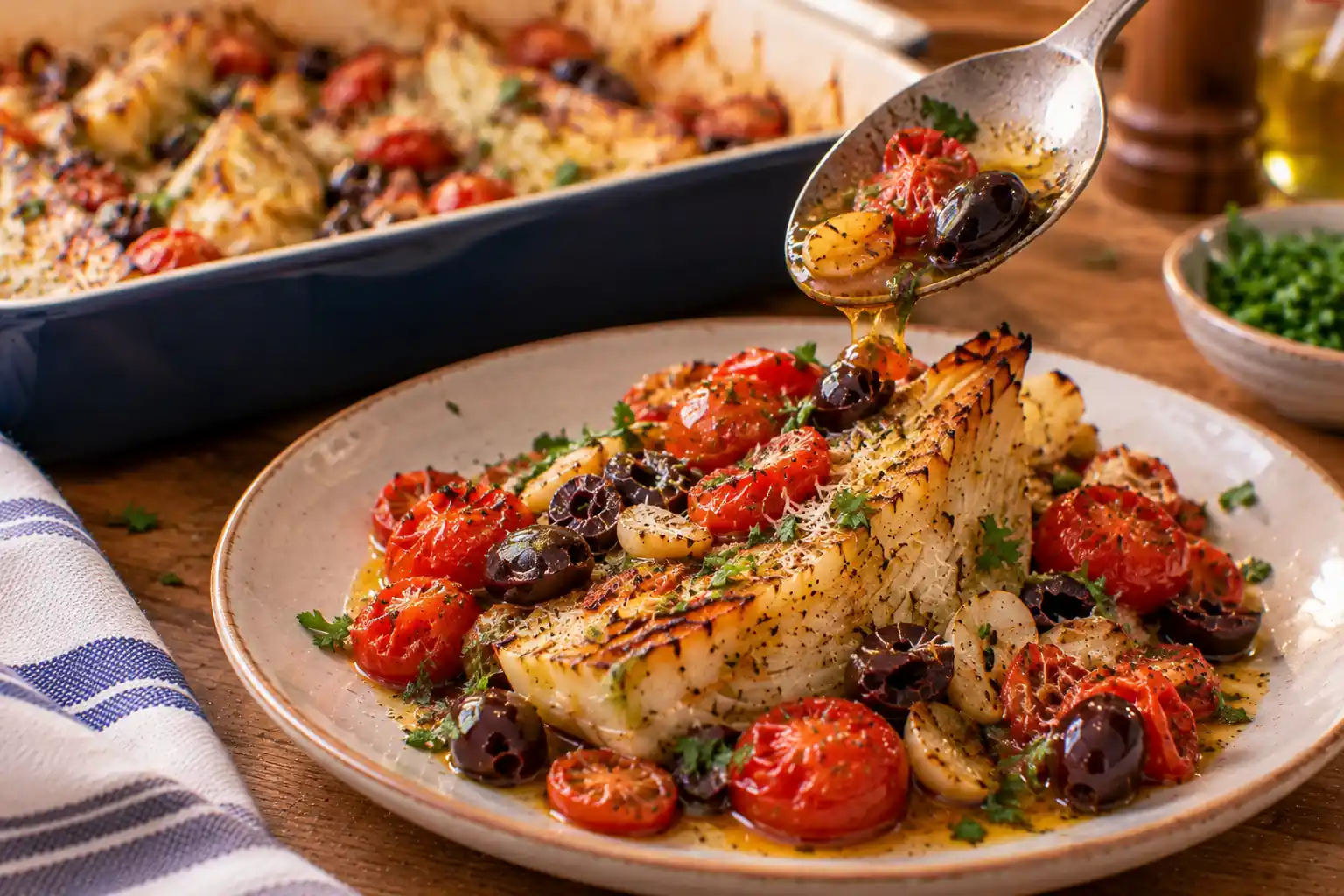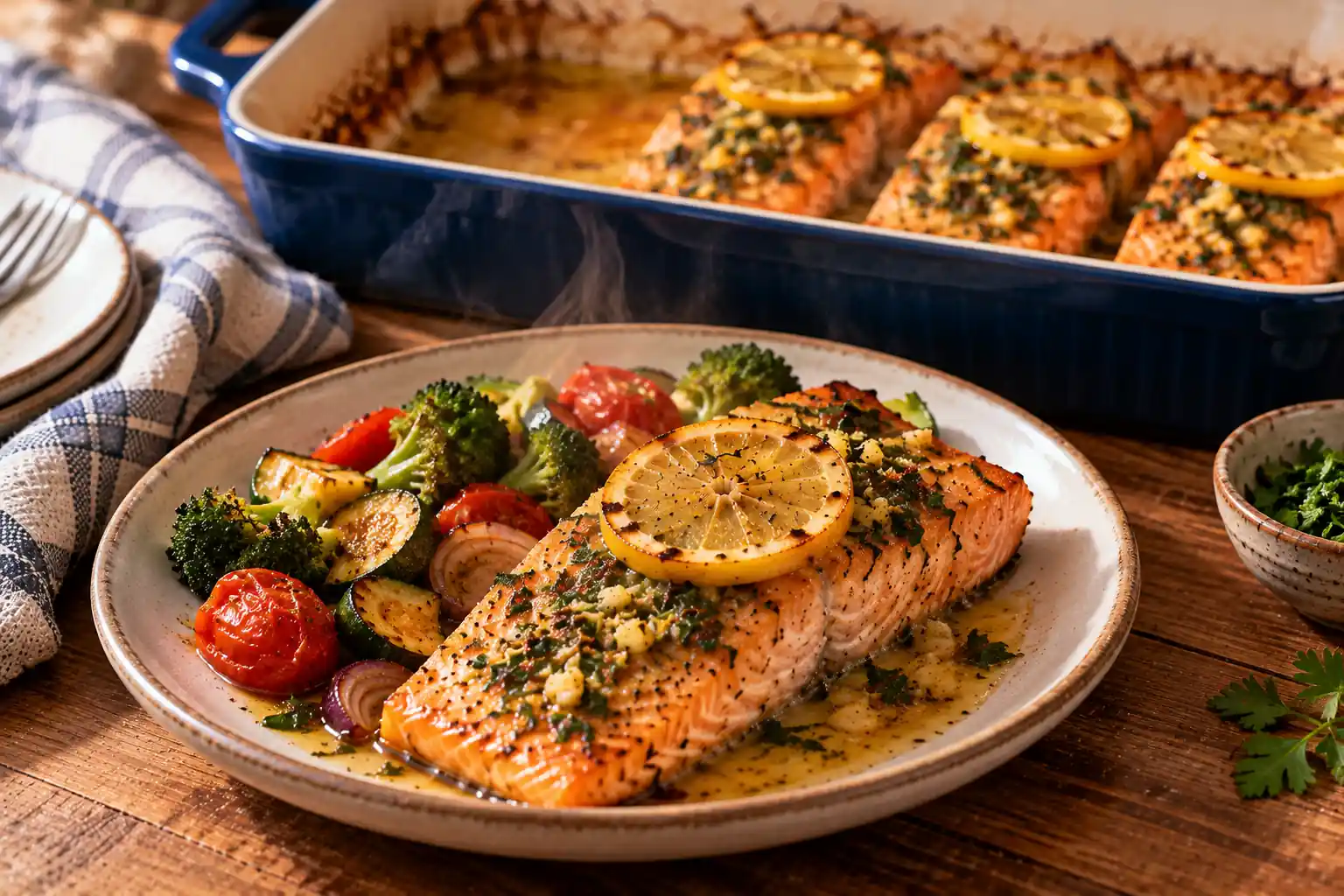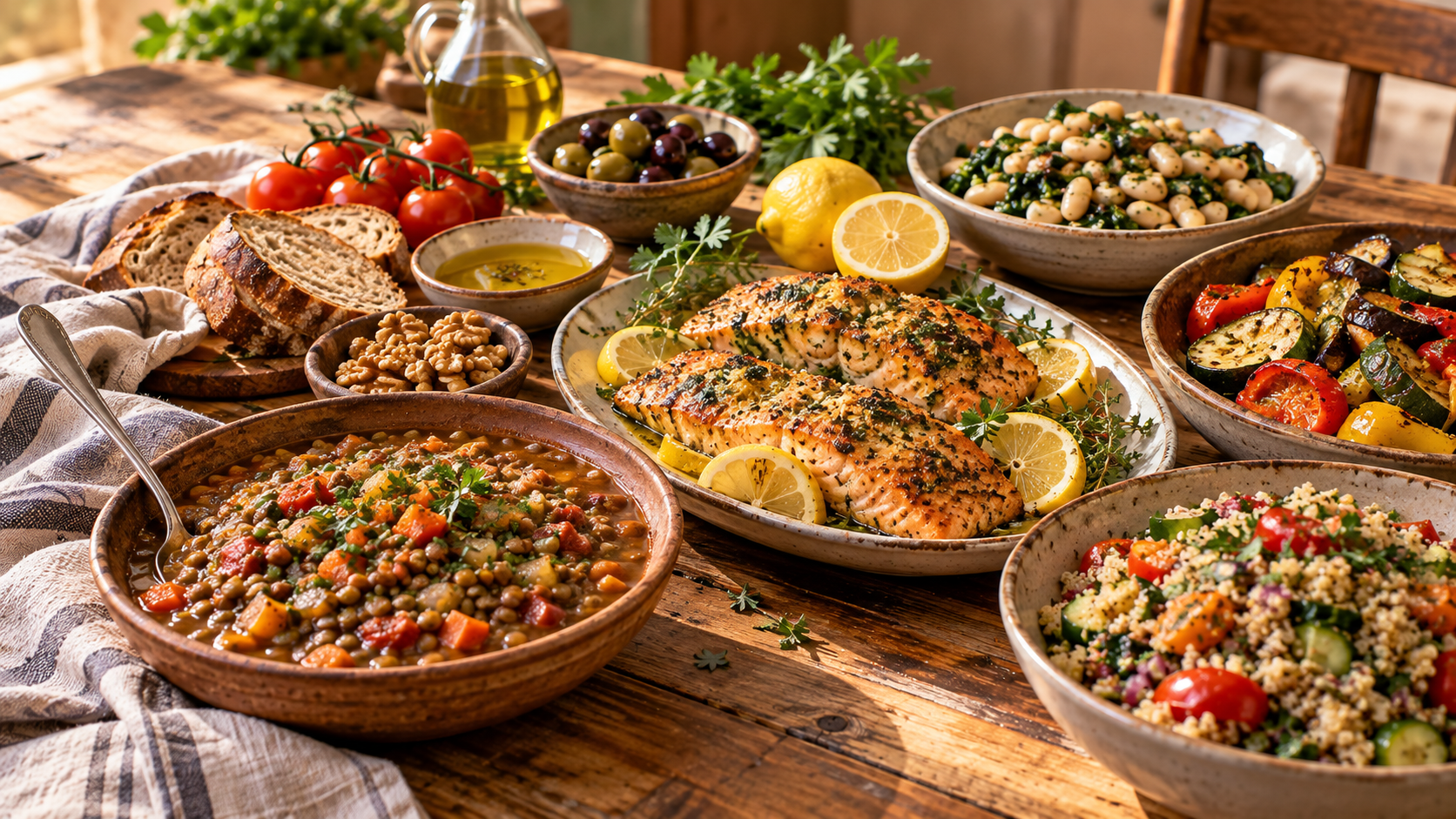
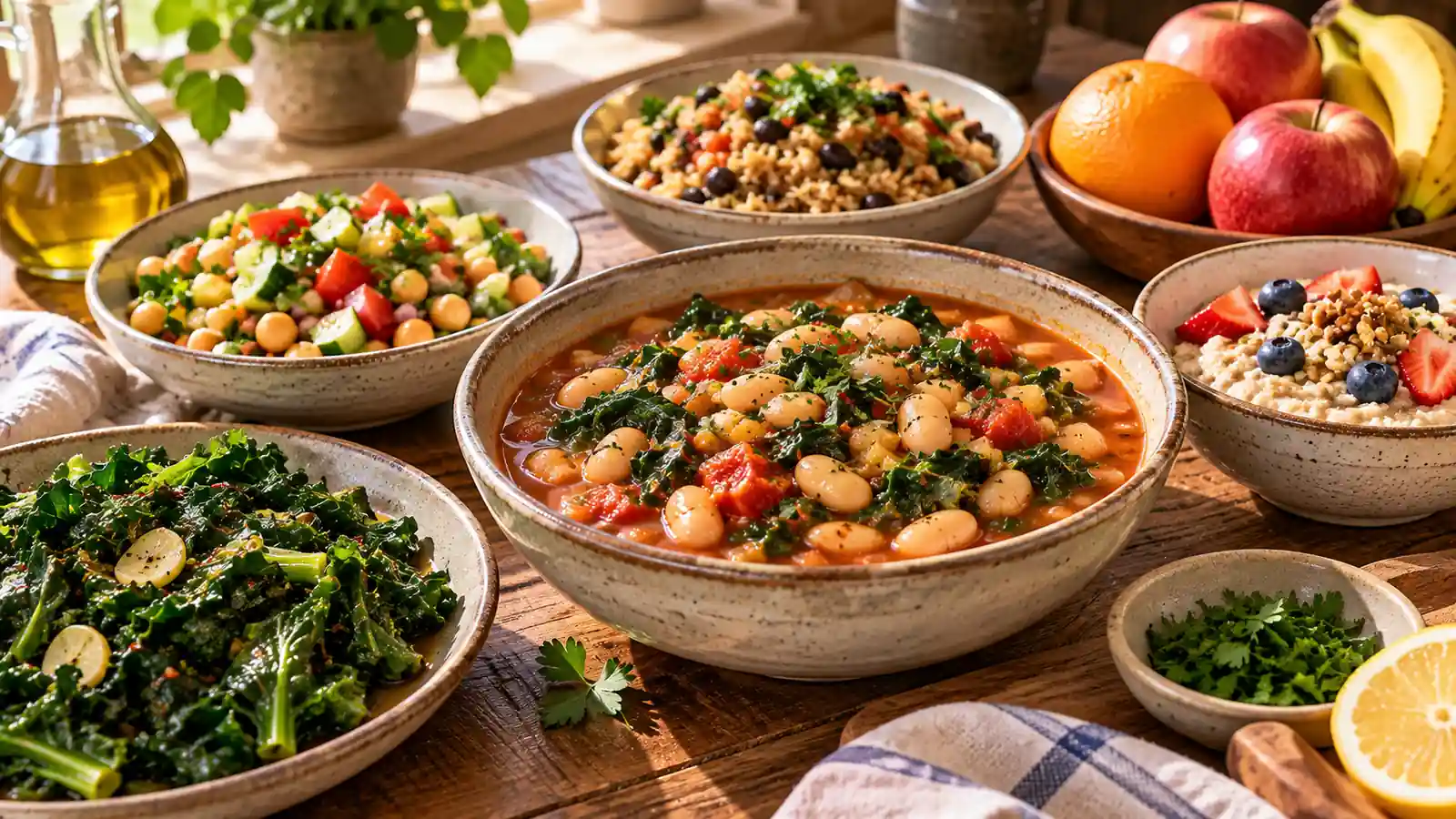
What does eating well for a longer, healthier life look like on an ordinary Tuesday? It might be a pot of beans simmering on the stove, a bowl of vegetables and whole grains, or a simple breakfast with fruit, oats, and nuts.
Food is only one part of healthy aging. Genetics, physical activity, sleep, social connections, and access to healthcare also matter. Still, research has linked several dietary patterns rich in vegetables, legumes, whole grains, fruits, and nuts with better health outcomes. The World Health Organization identifies these foods as important parts of a healthy diet, alongside balance, variety, and moderation. Its guidance on healthy eating offers a useful starting point.
The food traditions of Sardinia, Okinawa, Ikaria, Loma Linda, and Nicoya offer different ways to think about everyday meals. They are not identical, and no single food explains why people in these places may live long lives. But their varied food cultures provide useful ideas for cooking with more plant foods and making simple meals part of a regular routine.
These 25 recipes put those ideas into practice. You will find bean stews, vegetable soups, grain bowls, fresh salads, easy breakfasts, and satisfying dinners. Some take little more than chopping and mixing. Others need time on the stove or in the oven. Each offers a practical starting point for everyday cooking.
What Does Eating for Healthy Aging Look Like?
There is no single food that guarantees a long life. Nor is there one perfect menu that suits everyone. The stronger evidence points towards overall eating patterns rather than a handful of so-called superfoods.
A review published in Maturitas examined what researchers know about the diets of populations associated with exceptional longevity. It cautioned against assuming that food alone explains a community's longevity and noted that food traditions differ between places and change over time. Read the review on diet and longevity.
That distinction matters. A bowl of lentils does not guarantee a longer life. But beans, vegetables, whole grains, fruit, nuts, and other nutritious foods can help build a varied diet that supports health.
Here are a few practical principles behind the recipes in this collection.
- Eat legumes regularly. Beans, lentils, and chickpeas provide plant protein and dietary fiber. They also work in soups, salads, stews, and grain bowls.
- Make vegetables part of the meal. Use leafy greens, tomatoes, peppers, mushrooms, onions, and other vegetables in generous, varied combinations.
- Choose whole grains often. Oats, barley, bulgur, and brown rice add variety and fiber. Whole-grain bread and pasta can also fit into everyday meals.
- Include fruit, nuts, and seeds. Add them to breakfast bowls, salads, snacks, or other dishes where they suit the meal.
- Choose protein sources that fit your needs. Beans, lentils, tofu, eggs, yogurt, and fish can all have a place in a varied diet.
- Make meals enjoyable and practical. Recipes that fit your budget, local ingredients, cooking skills, and schedule are easier to return to.
These principles align with the World Health Organization's healthy-diet guidance and the American Heart Association's explanation of Mediterranean-style eating. Neither requires you to prepare elaborate meals or buy expensive ingredients.
“A few dependable meals are a practical place to begin.”
Blue Regions editorial note
25 Longevity Recipes for Everyday Cooking
The recipes below use familiar ingredients in different ways. Some draw on broad Mediterranean cooking patterns, while others use ingredients common in different parts of the world. They are modern everyday recipes, not claims that every dish is a traditional meal from one of the five Blue Regions.
1. Mediterranean White Bean and Tomato Stew
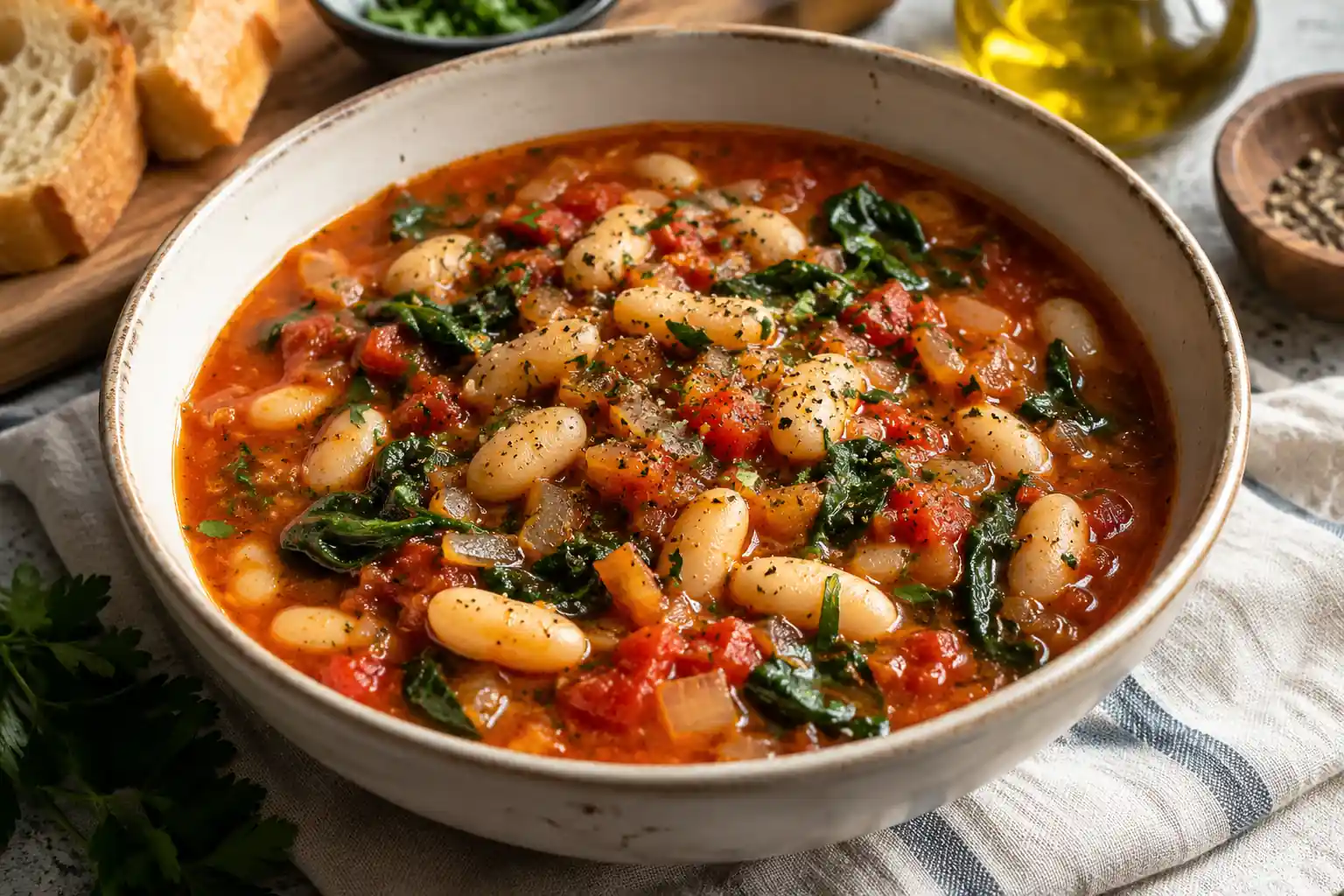
White beans, tomatoes, garlic, onion, and herbs make a satisfying one-pot meal. Add leafy greens towards the end of cooking for color and a fresh finish. The beans provide plant protein and fiber, while the tomatoes and herbs bring depth without requiring a long list of seasonings.
This stew works well for a simple dinner. Serve it on its own or with whole-grain bread to soak up the broth. Make a larger batch if you want leftovers for lunch the next day.
The ingredients reflect familiar Mediterranean cooking patterns, but this particular combination is a modern home-style recipe rather than a claim to an authentic traditional dish from Ikaria or another island.
Get the full recipe: Mediterranean White Bean and Tomato Stew
2. Rustic Lentil and Vegetable Soup
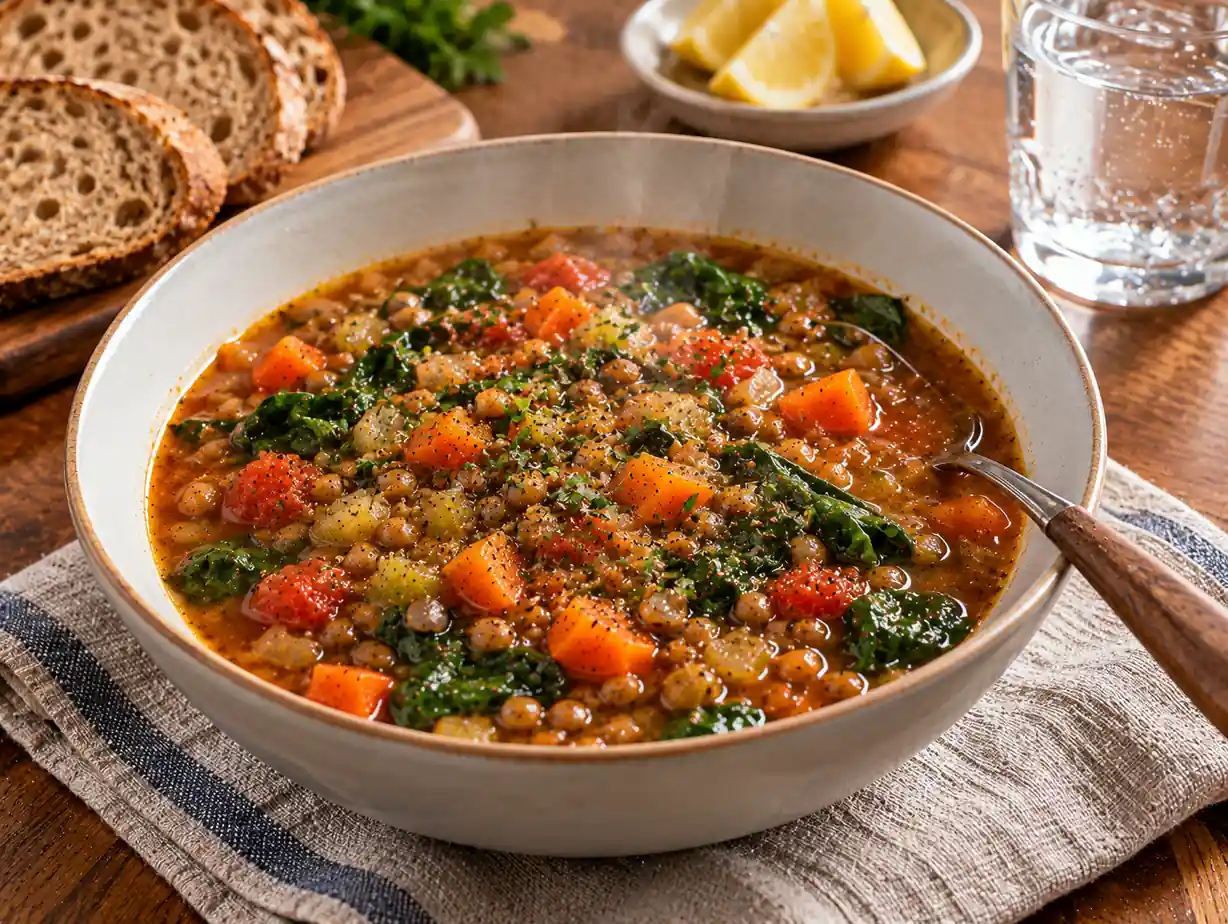
Lentils are useful to keep in the kitchen because they cook into a hearty meal without much fuss. Combine them with carrots, onions, tomatoes, celery, and leafy greens for a soup that can carry a weekday dinner.
As the lentils soften, they help give the broth body. The vegetables bring different textures and flavors, so the soup does not depend on cream or complicated additions to feel substantial.
Serve it with whole-grain bread, or prepare a pot ahead of time for easy meals during a busy week. You can also adjust the vegetables to suit the season and what is available.
Get the full recipe: Rustic Lentil and Vegetable Soup
3. Chickpea, Cucumber and Tomato Salad
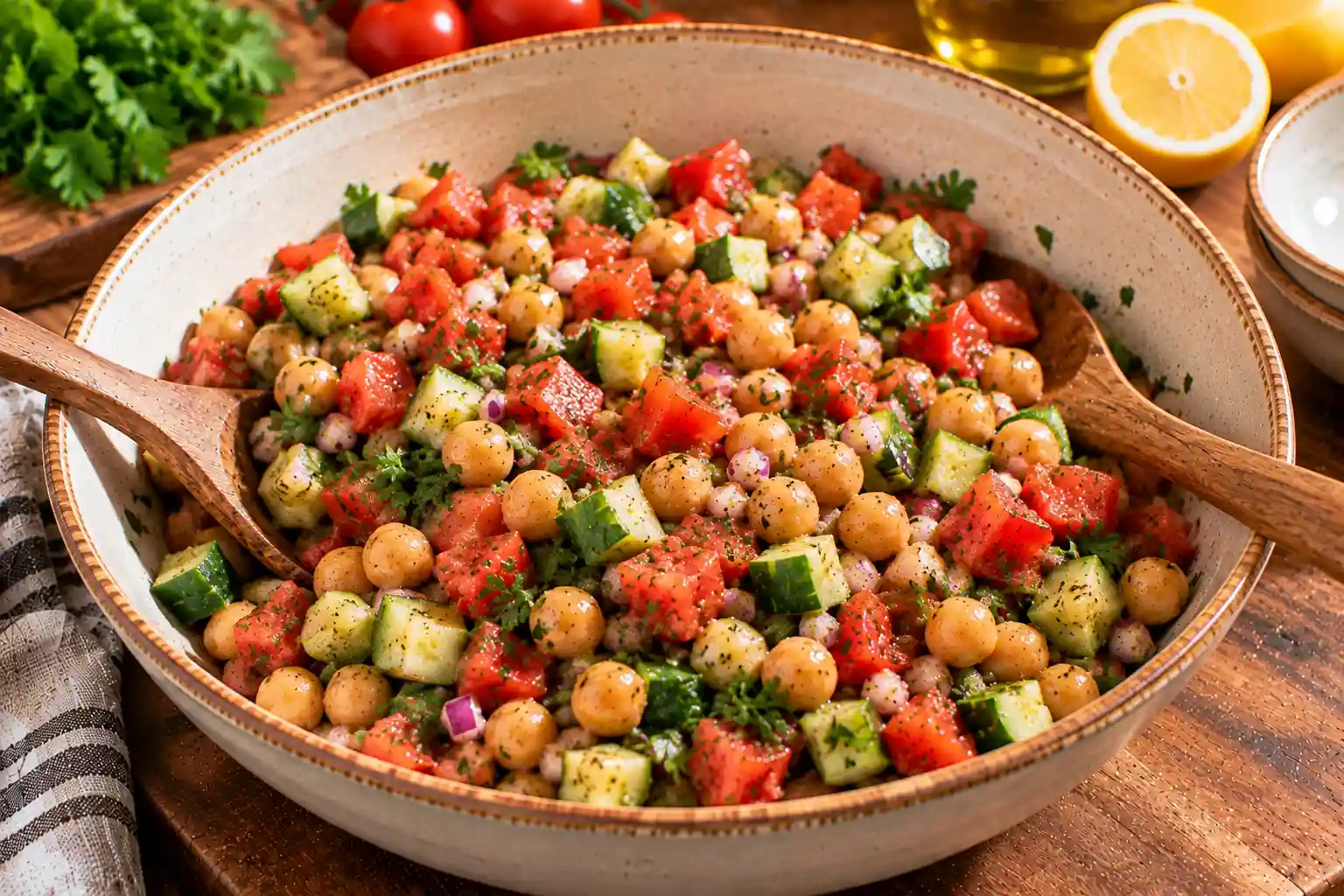
Not every meal needs a stove. This chickpea salad combines crisp cucumber, ripe tomatoes, red onion, parsley, lemon juice, and olive oil for a fresh meal that comes together quickly.
Chickpeas give the salad substance, while the vegetables add crunch and juiciness. Lemon and herbs keep the flavors bright. If you want a larger meal, serve it with whole-grain bread or alongside roasted vegetables or fish.
It is also easy to adapt. Add more herbs if you enjoy them, or replace the chickpeas with white beans for a different version. This is a simple modern salad, not a recipe tied exclusively to one region.
Get the full recipe: Chickpea, Cucumber and Tomato Salad
4. White Beans with Garlic and Greens
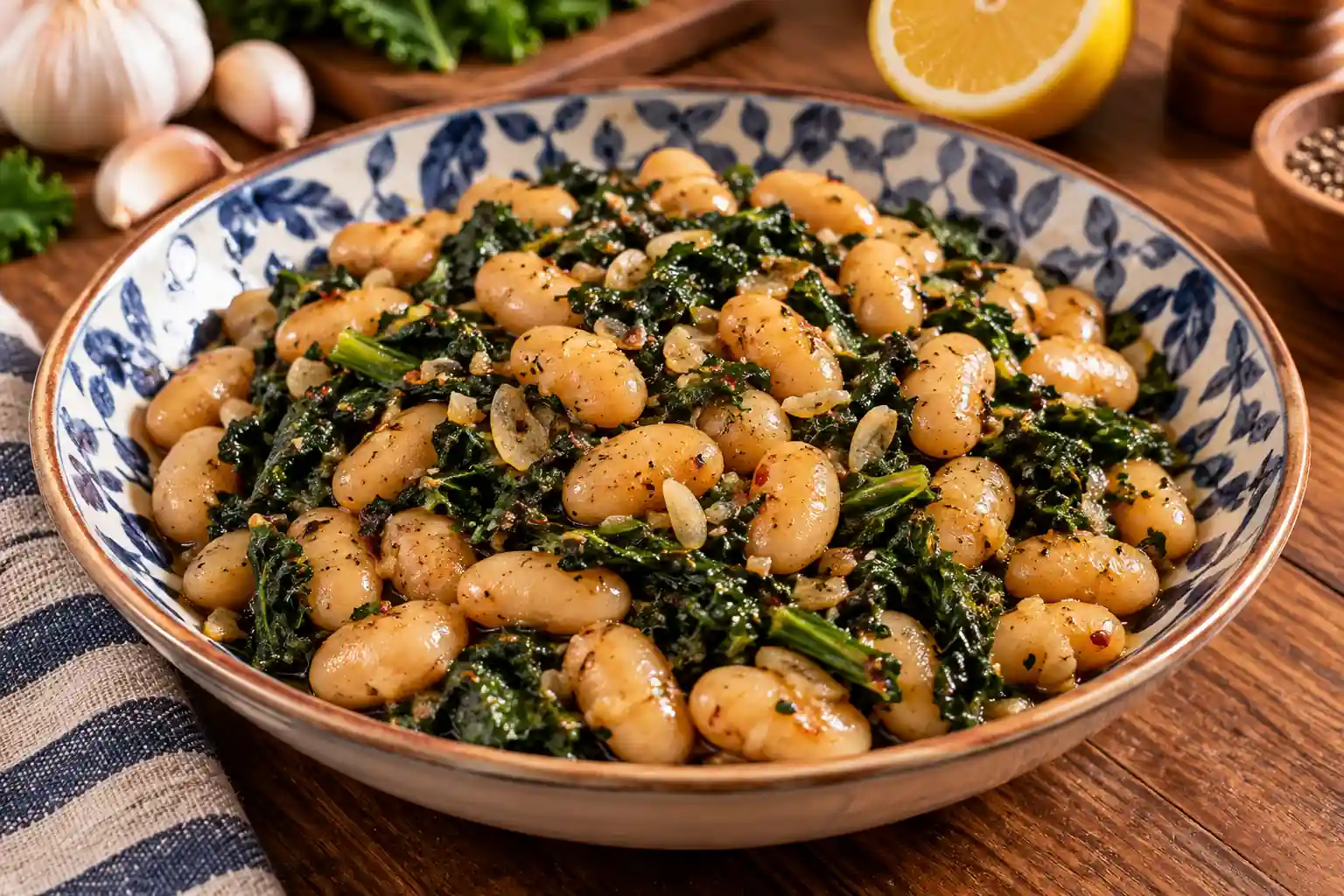
White beans and leafy greens make a useful combination for a quick lunch or a light dinner. Gently cook garlic in olive oil, add the greens until they soften, then fold in cooked white beans and season to taste.
The result is simple but satisfying. The beans provide fiber and plant protein, while the greens add color and variety. A little lemon juice can brighten the dish just before serving.
Eat it on its own, spoon it over whole grains, or serve it as a side with another source of protein. It is also a practical way to use greens before they wilt in the refrigerator.
Get the full recipe: White Beans with Garlic and Greens
5. Black Bean and Vegetable Grain Bowl
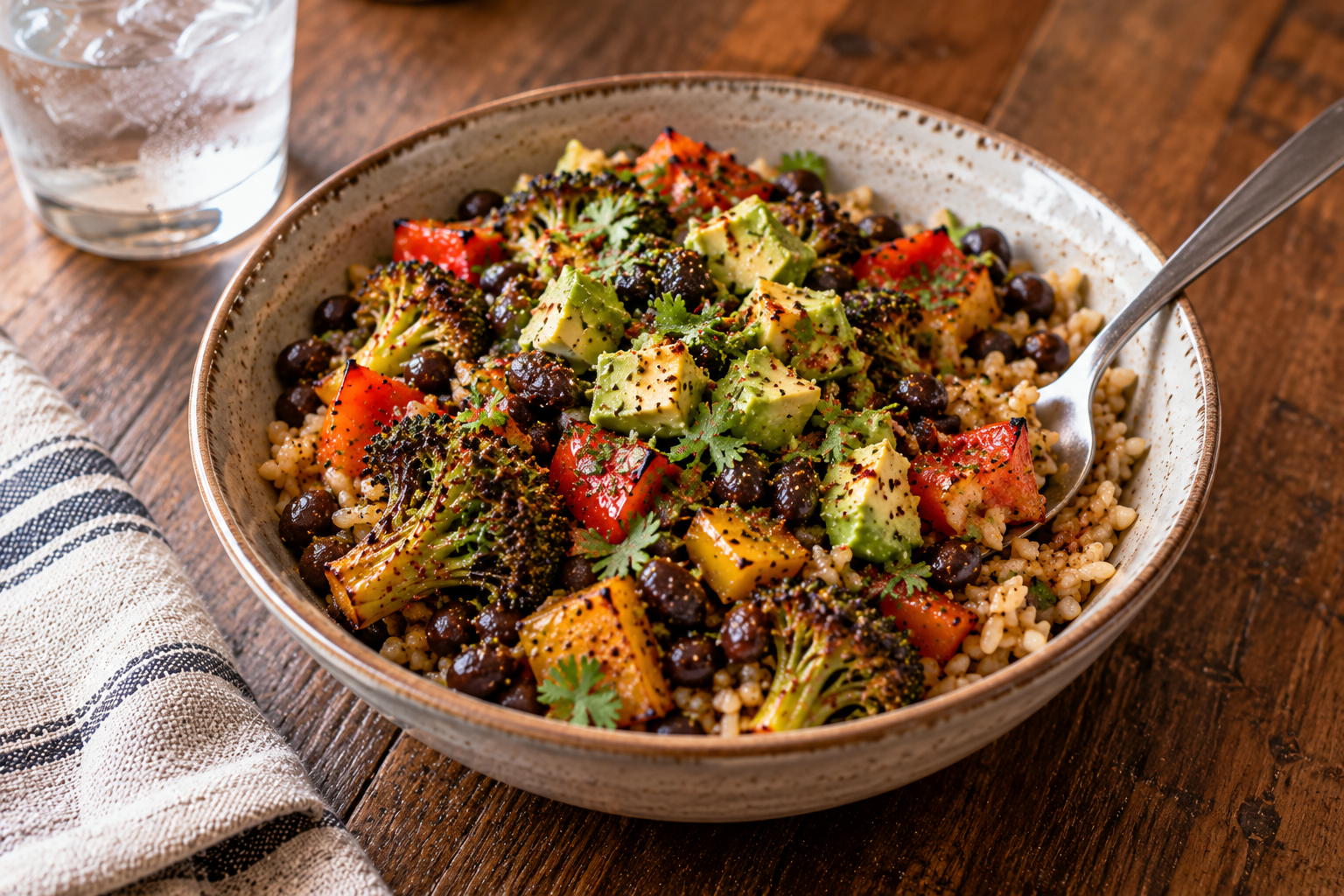
A grain bowl makes it easy to combine several food groups in one meal. Start with brown rice or another whole grain, add black beans, and top with vegetables such as peppers, tomatoes, and leafy greens.
The appeal is its flexibility. Use vegetables you already have, add fresh herbs or a squeeze of lime, and adjust the portions to suit your appetite. Black beans make the bowl more substantial, while the grains provide a satisfying base.
This is a modern everyday meal rather than a traditional dish from Loma Linda. Its ingredients fit a broadly plant-forward approach to cooking, and the recipe is easy to adapt for lunch or dinner.
Get the full recipe: Black Bean and Vegetable Grain Bowl
6. Roasted Vegetable and Chickpea Bowl
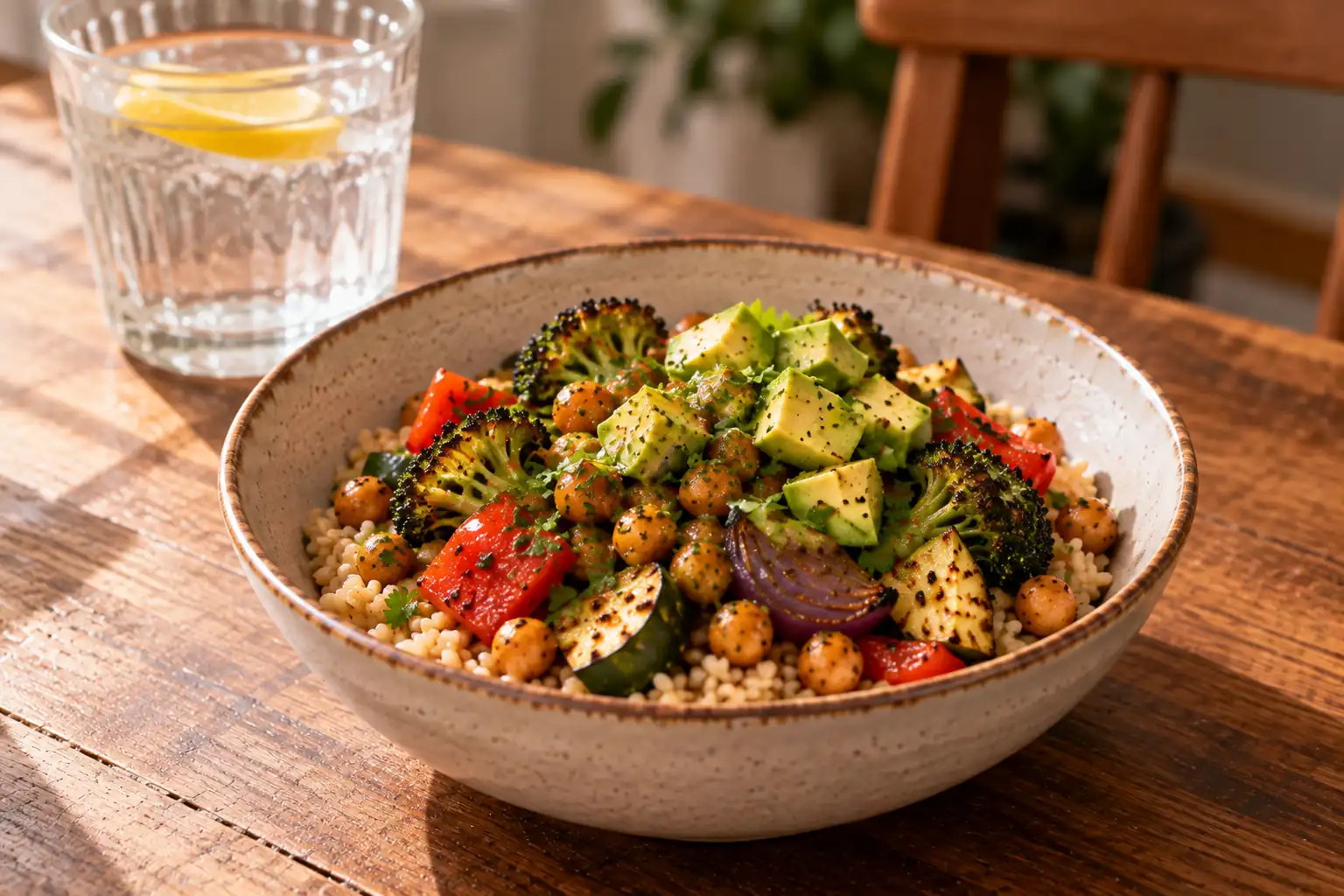
Roasting brings out the natural sweetness of vegetables and gives them lightly browned edges. Combine roasted vegetables with chickpeas and a base of whole grains for a meal with plenty of texture.
Try carrots, peppers, onions, or seasonal vegetables. Toss them with olive oil and herbs, roast until tender, and serve with chickpeas and cooked grains. A simple lemon dressing can tie everything together.
This bowl works well for meal preparation because the vegetables and grains can be cooked ahead. Keep the dressing separate until serving if you want to preserve the texture.
Get the full recipe: Roasted Vegetable and Chickpea Bowl
7. Vegetable and Chickpea Bake
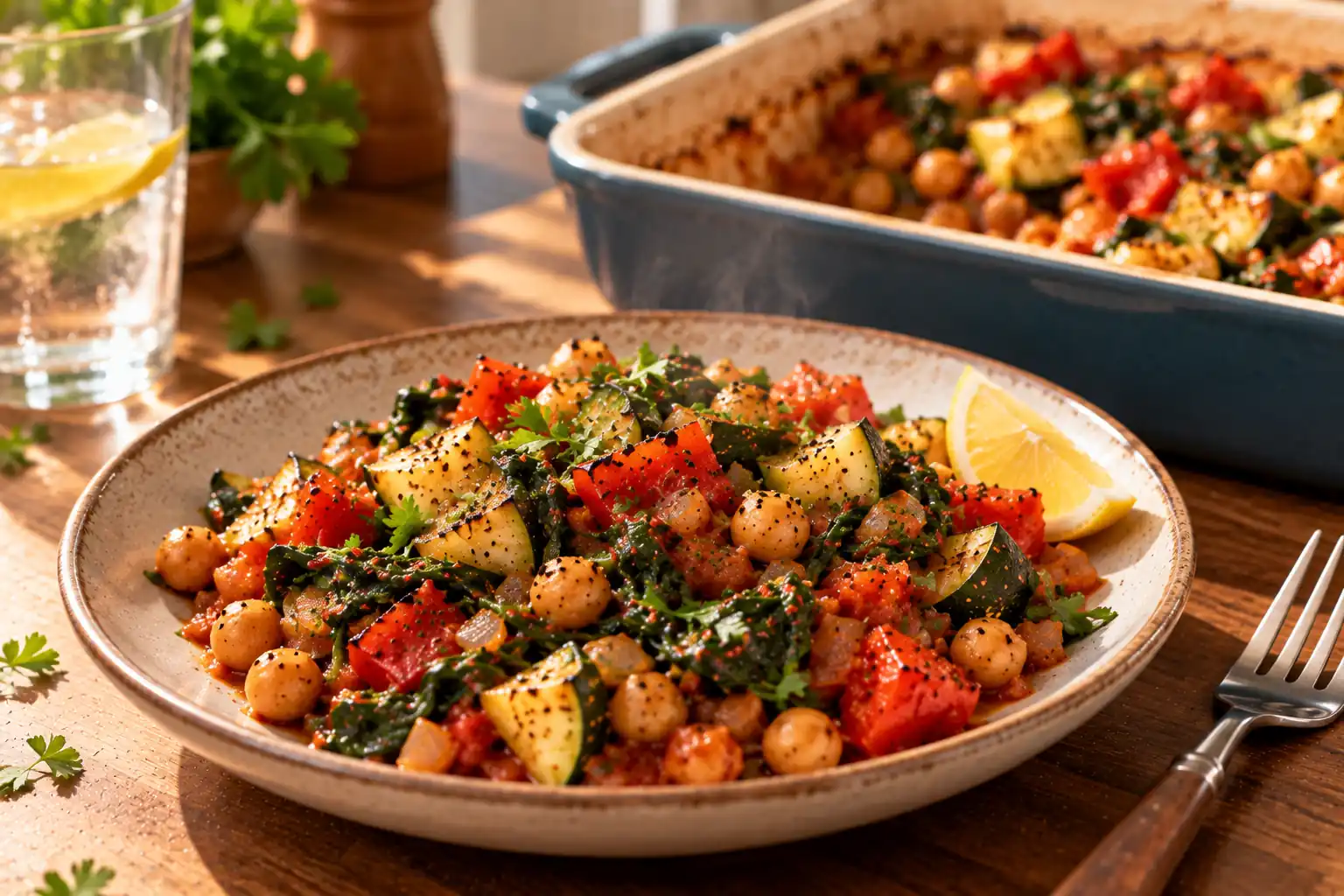
A baked dish can bring vegetables and legumes together with little attention once it is in the oven. Chickpeas, tomatoes, onions, and other vegetables soften as they cook, allowing their flavors to mingle.
The chickpeas give the dish substance, while the vegetables help keep it varied. Herbs, garlic, and a little olive oil add flavor. Depending on the ingredients, you can serve the bake on its own or with whole grains.
It is a useful option when you want a warm meal that can be prepared in one dish. You can also change the vegetables according to the season.
Get the full recipe: Vegetable and Chickpea Bake
8. Stuffed Bell Peppers with Brown Rice and Vegetables
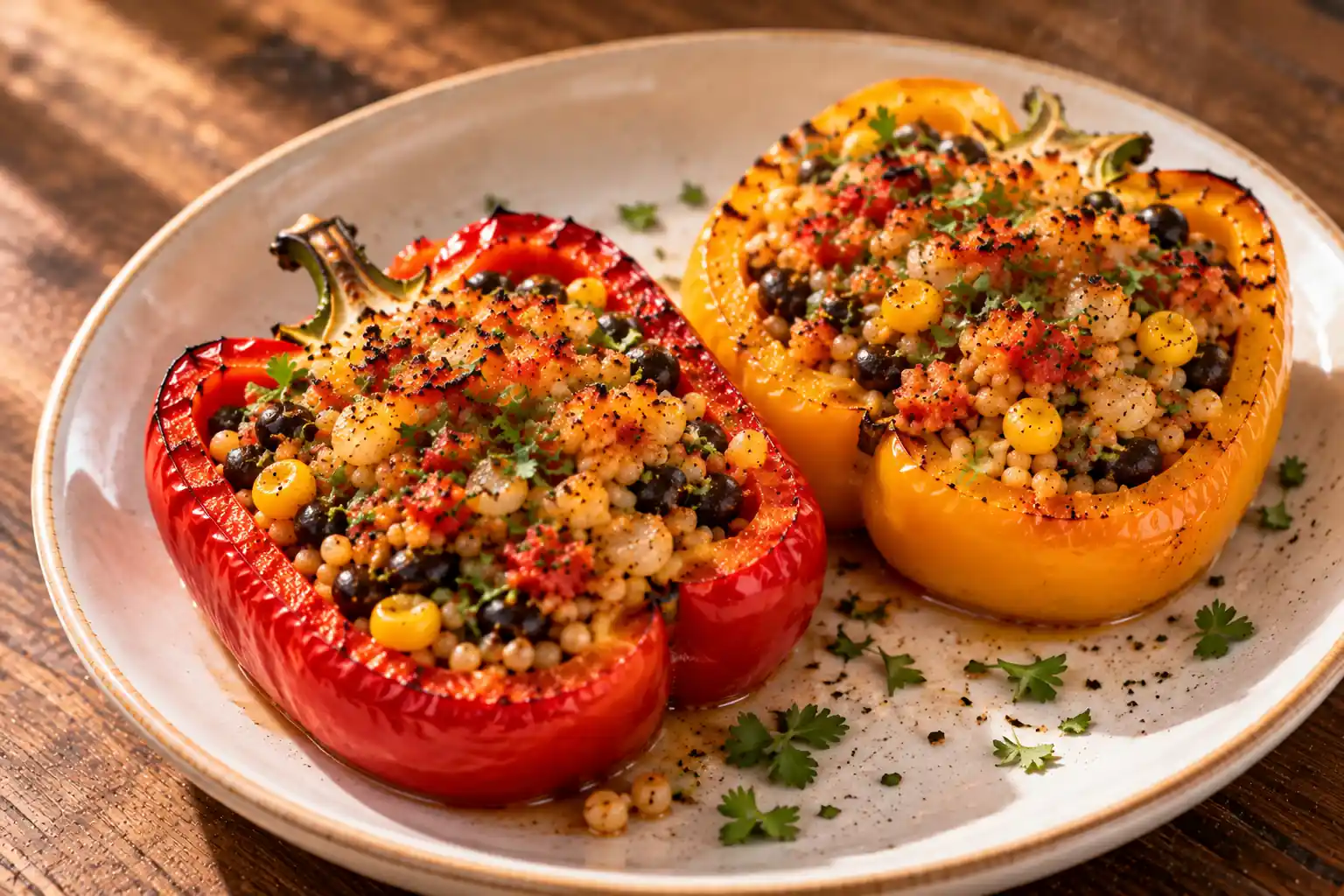
Bell peppers make convenient containers for a filling made from brown rice, vegetables, herbs, and seasonings. As the peppers bake, they soften and develop a sweeter flavor.
The filling is easy to change. Add beans for more plant protein, use leftover rice to save time, or include chopped vegetables that need using. The result is a colorful meal that can be served on its own or alongside a salad.
Although stuffed peppers appear in several food traditions, this particular version should be understood as a modern home-cooking recipe rather than a dish exclusive to any one Blue Region.
Get the full recipe: Stuffed Bell Peppers with Brown Rice and Vegetables
9. Rustic Vegetable and Bean Skillet
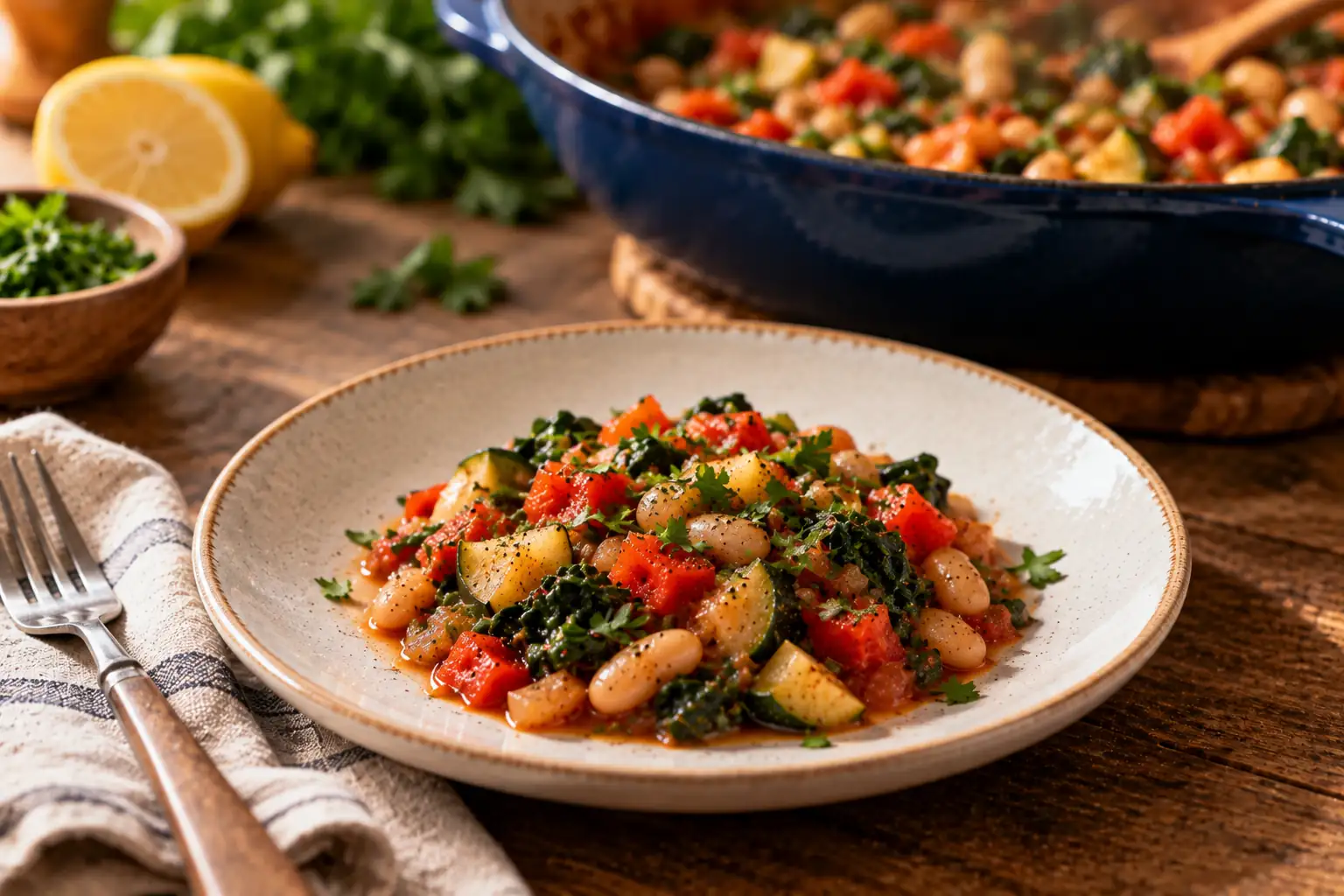
A skillet meal is useful when you want dinner without several pots to wash. Cook onions and garlic, add seasonal vegetables, then stir in cooked beans and herbs. Let everything heat through until the vegetables are tender.
The beans help make the dish filling, and the vegetables give you room to vary the flavor throughout the year. Tomatoes can add moisture, while a little lemon or fresh herb at the end can lift the finished dish.
Serve it with whole-grain bread, brown rice, or another grain. It is the kind of flexible recipe that can work with ingredients already in your kitchen.
Get the full recipe: Rustic Vegetable and Bean Skillet
10. Garlic Sautéed Greens with White Beans
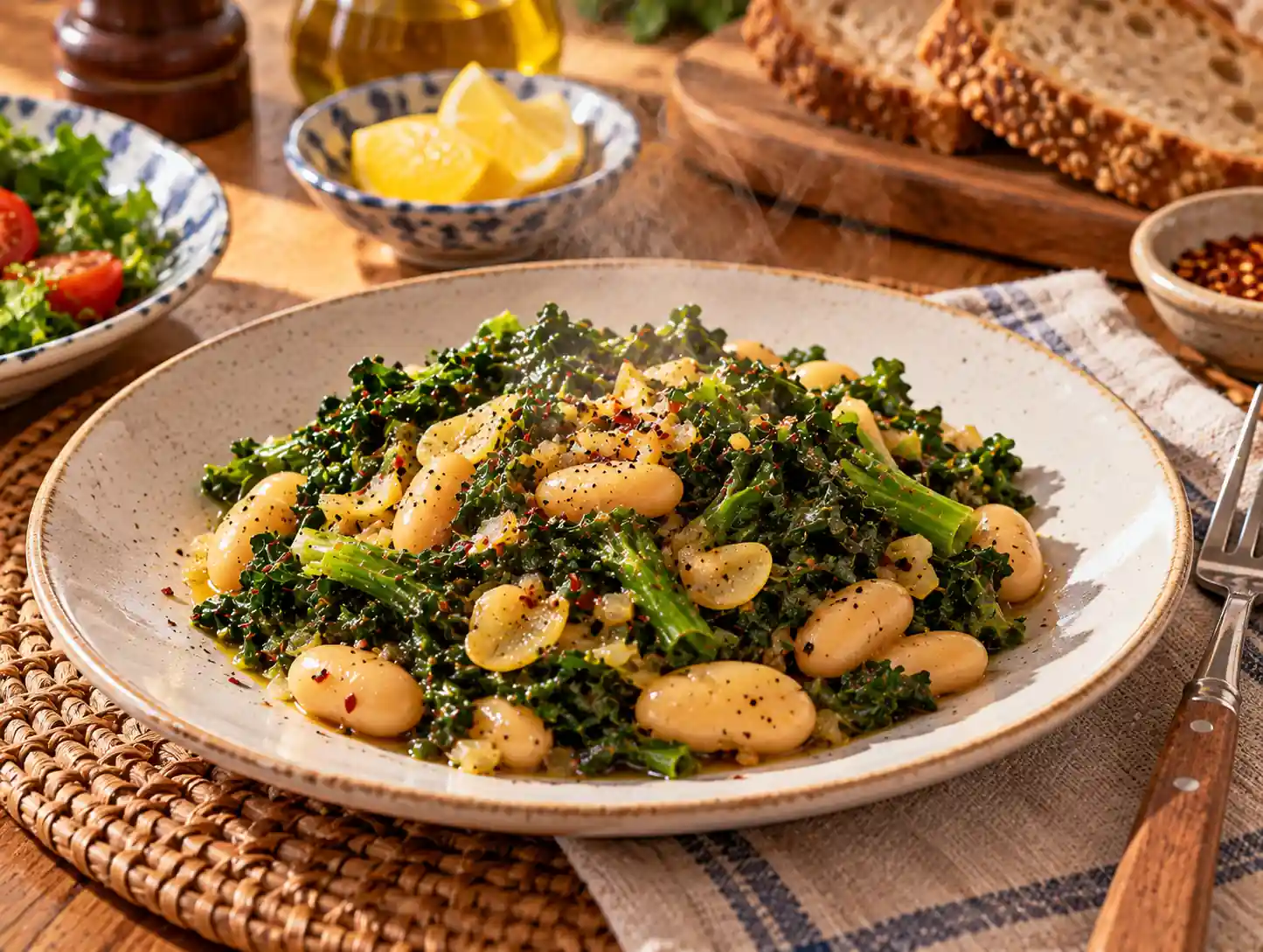
Leafy greens cook quickly, which makes them useful for busy evenings. Sauté garlic in olive oil, add greens such as spinach or kale, and fold in white beans once the leaves begin to soften.
The beans make the dish more substantial than greens alone. Garlic and olive oil bring flavor, while a squeeze of lemon can help balance the finished meal.
Serve this as a side or make it the center of a simple lunch with whole-grain toast. You can use different greens depending on what is available, adjusting the cooking time to suit their texture.
Get the full recipe: Garlic Sautéed Greens with White Beans
11. Barley and Vegetable Soup
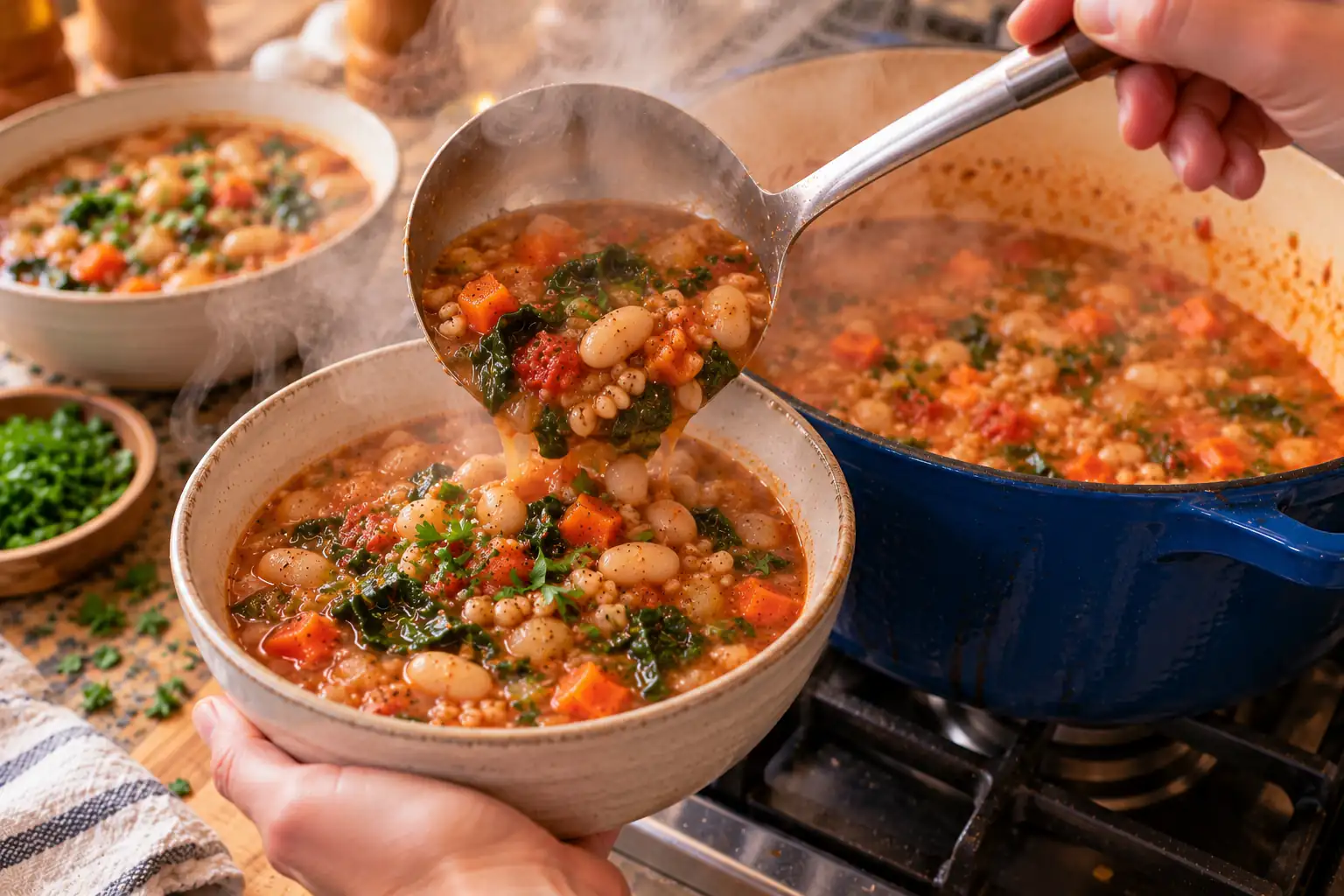
Barley adds a pleasant chew to vegetable soup and makes the broth more substantial. Simmer it with carrots, celery, onions, tomatoes, and other vegetables until the grains are tender.
Whole-grain barley also contributes dietary fiber. Check the package instructions, because cooking time depends on the type of barley you use. Pearled barley cooks differently from whole-grain hulled barley.
This soup is well suited to batch cooking. Make enough for another meal, refrigerate leftovers promptly, and add a little water or broth when reheating if the barley has absorbed much of the liquid.
Get the full recipe: Barley and Vegetable Soup
12. Bulgur and Chickpea Bowl
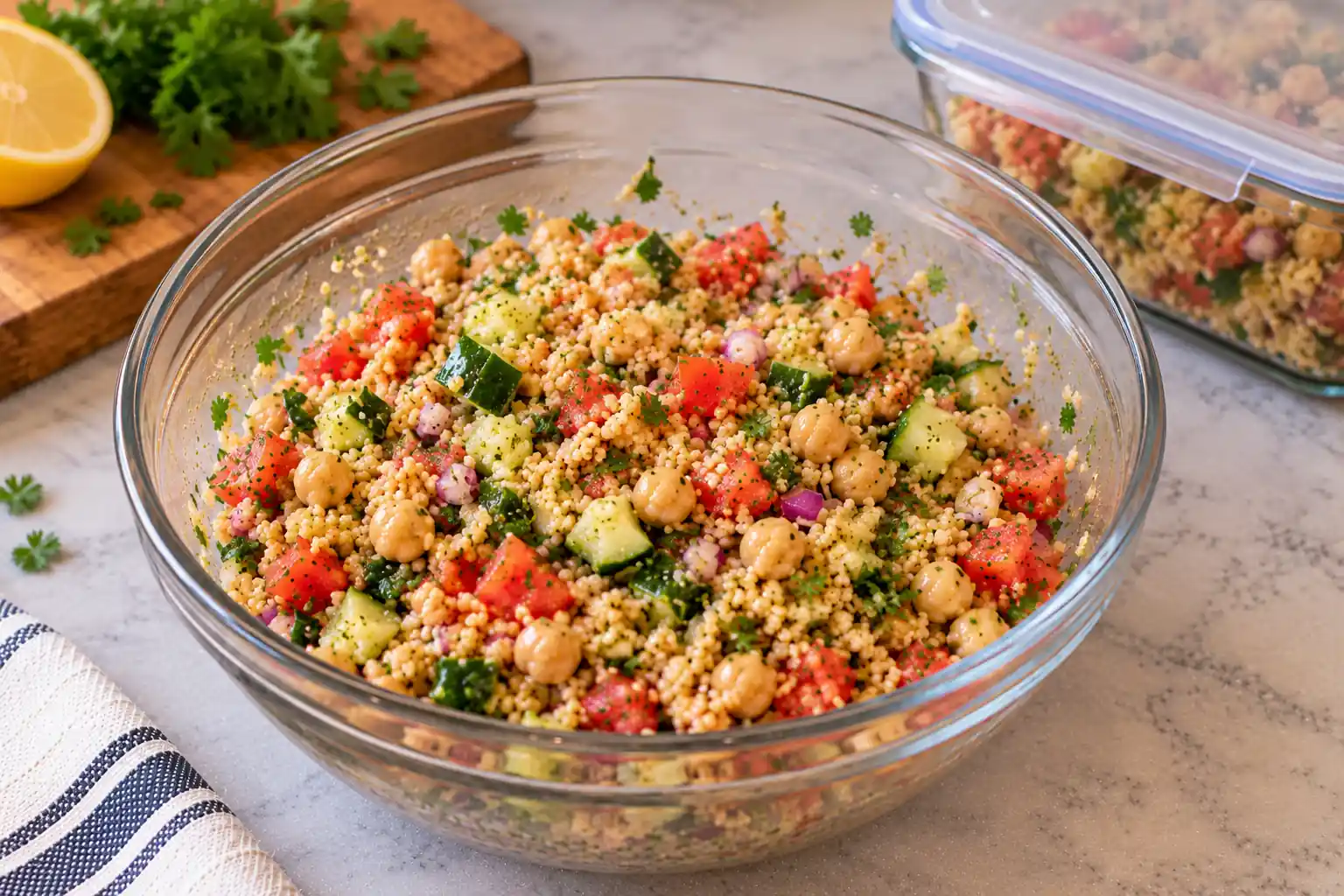
Bulgur cooks quickly and has a mild, nutty flavor that pairs well with chickpeas, vegetables, and herbs. Build a bowl with cooked bulgur, chickpeas, chopped cucumber or tomatoes, parsley, and a lemon dressing.
The combination offers different textures without requiring complicated preparation. You can serve it warm or allow the bulgur to cool before adding the fresh vegetables.
Bulgur is used in many dishes across the eastern Mediterranean and Middle East. This bowl draws on familiar ingredients from those broader food traditions, but it should not be treated as a single traditional recipe belonging to one place.
Get the full recipe: Bulgur and Chickpea Bowl
13. Brown Rice, Black Beans and Avocado Bowl
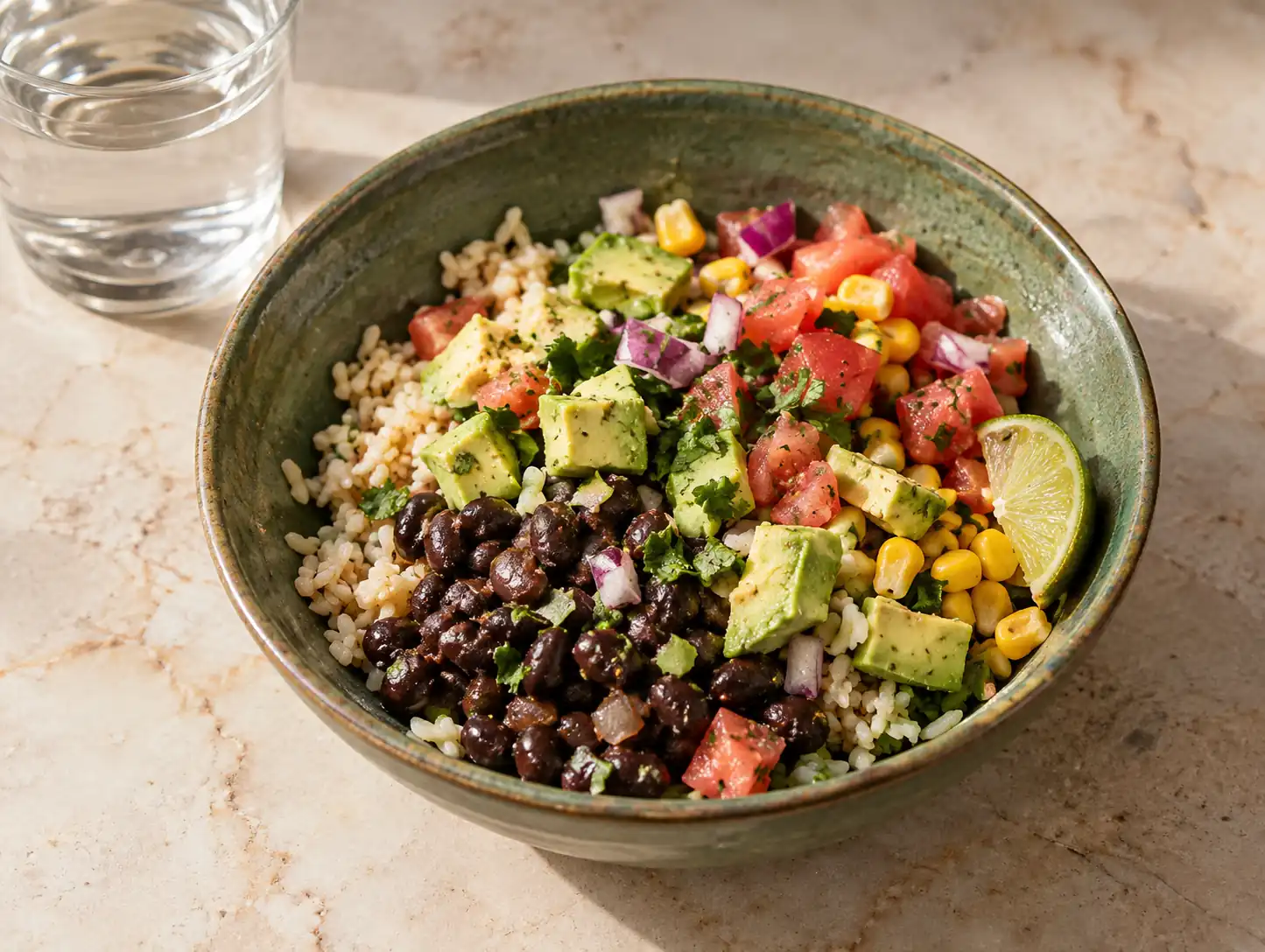
Brown rice, black beans, and avocado create a simple meal with a mix of textures. The rice provides a grain base, the beans add plant protein and fiber, and the avocado contributes a creamy texture.
Add tomatoes, peppers, or leafy greens for extra variety. Lime juice and fresh herbs can brighten the bowl without requiring a heavy sauce.
It is easy to prepare individual portions or make the components ahead for several meals. Store the avocado separately and add it close to serving time to help keep it fresh.
Get the full recipe: Brown Rice, Black Beans and Avocado Bowl
14. Whole-Grain Pasta with Tomatoes, Greens and Beans
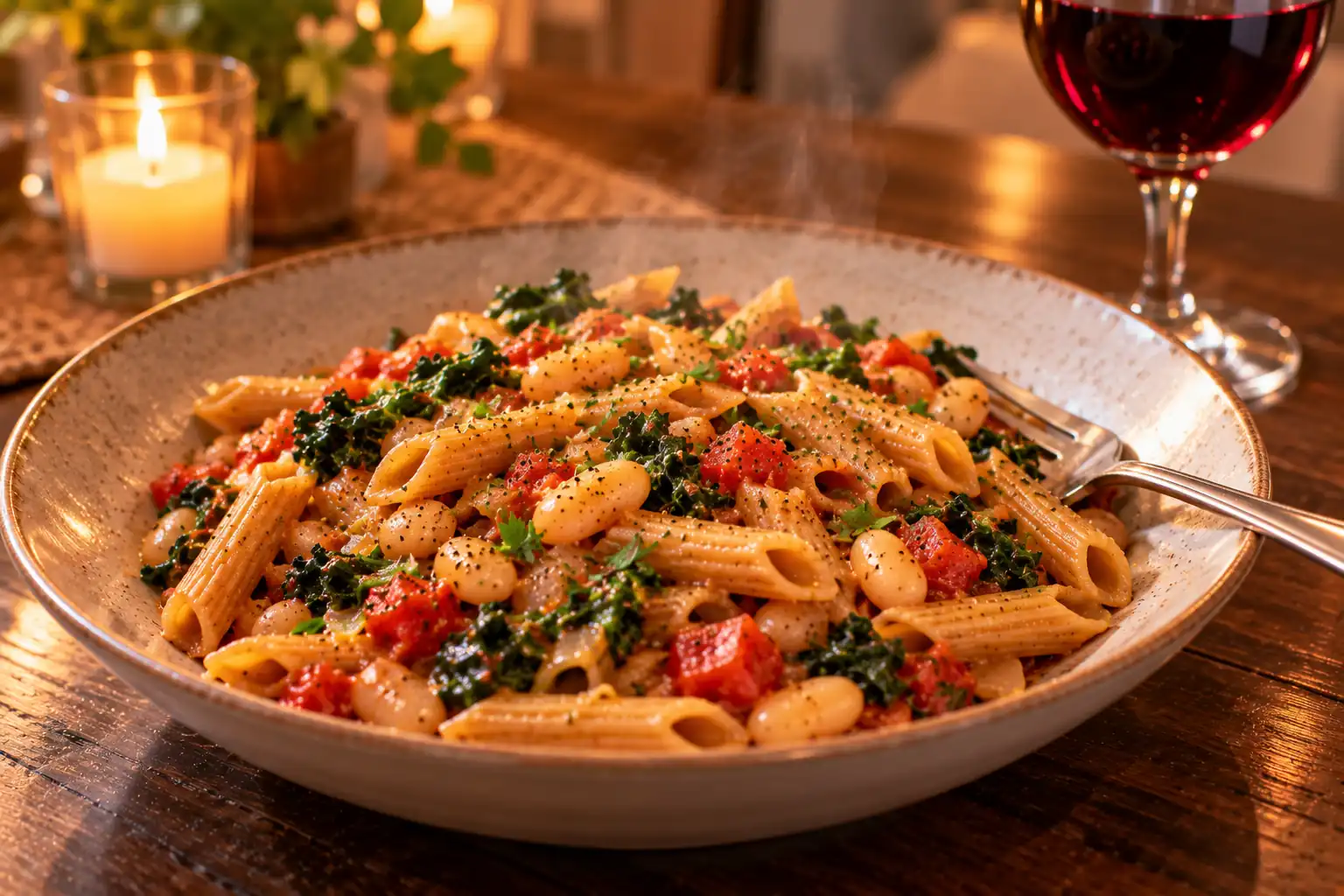
Pasta can be part of a varied diet, especially when it is paired with vegetables and legumes. In this recipe, tomatoes form a simple sauce, leafy greens add color, and beans make the meal more substantial.
Use whole-grain pasta if you enjoy its texture and want to include more whole grains. Garlic, olive oil, and herbs provide flavor without requiring a complicated sauce.
This dish draws on familiar Mediterranean ingredients, but it is a modern combination rather than a claim to a specific traditional recipe. Adjust the vegetables to suit the season and serve it warm for lunch or dinner.
Get the full recipe: Whole-Grain Pasta with Tomatoes, Greens and Beans
15. Savory Oatmeal with Vegetables and Herbs
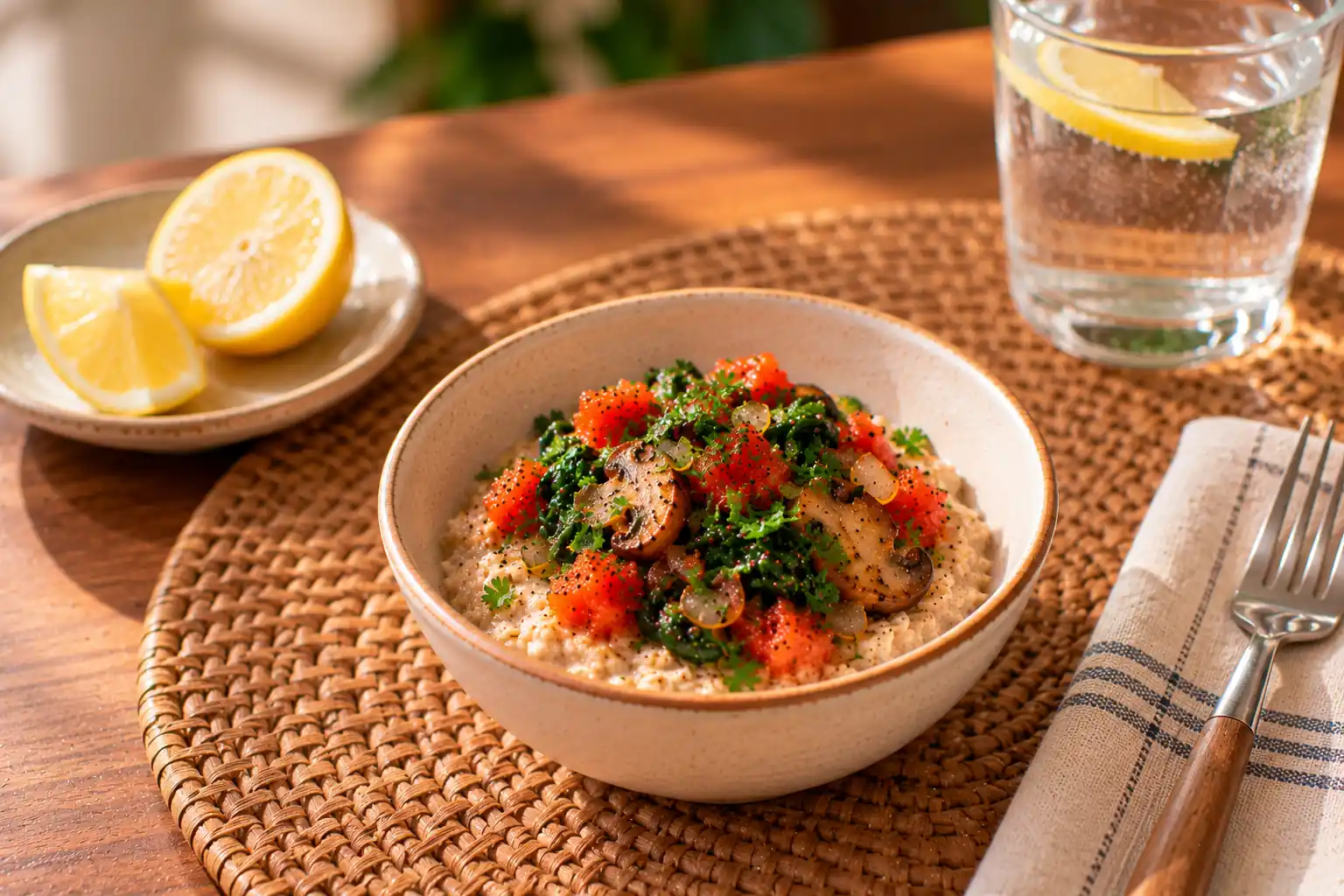
Oats do not have to be sweet. Cook them with water or a suitable broth, then top them with sautéed vegetables and fresh herbs for a savory breakfast or light meal.
The oats provide a whole-grain base, while vegetables add variety and flavor. Mushrooms, spinach, tomatoes, and spring onions are all options, depending on what you have available.
This recipe is particularly useful when you want to move beyond the usual breakfast routine. Adjust the consistency to your preference and add a source of protein, such as an egg or beans, if that suits your meal.
Get the full recipe: Savory Oatmeal with Vegetables and Herbs
16. Berry, Walnut and Oat Breakfast Bowl
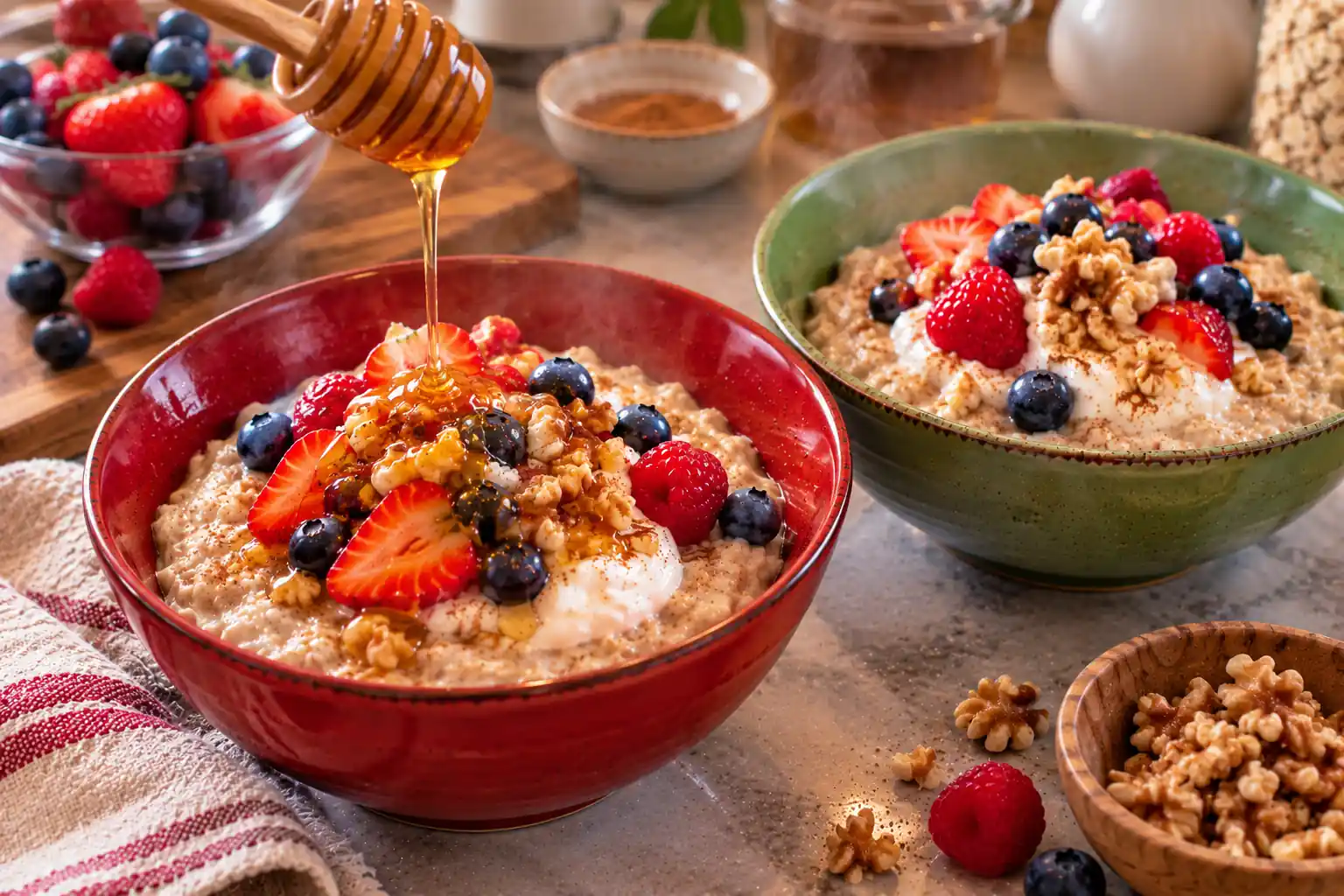
A breakfast bowl of oats, berries, and walnuts combines whole grains, fruit, and nuts in one simple meal. Use fresh or frozen berries, depending on availability, and add milk or yogurt if you prefer a creamier texture.
The berries bring a fresh, slightly tart flavor. Walnuts add crunch, while oats make the bowl more substantial. You can prepare the ingredients in a few minutes, making this a practical option for busy mornings.
There is no need to rely on a special product or elaborate topping. Choose unsweetened oats and adjust any added sweetener to your taste.
Get the full recipe: Berry, Walnut and Oat Breakfast Bowl
17. Greek Yogurt with Fresh Fruit and Nuts
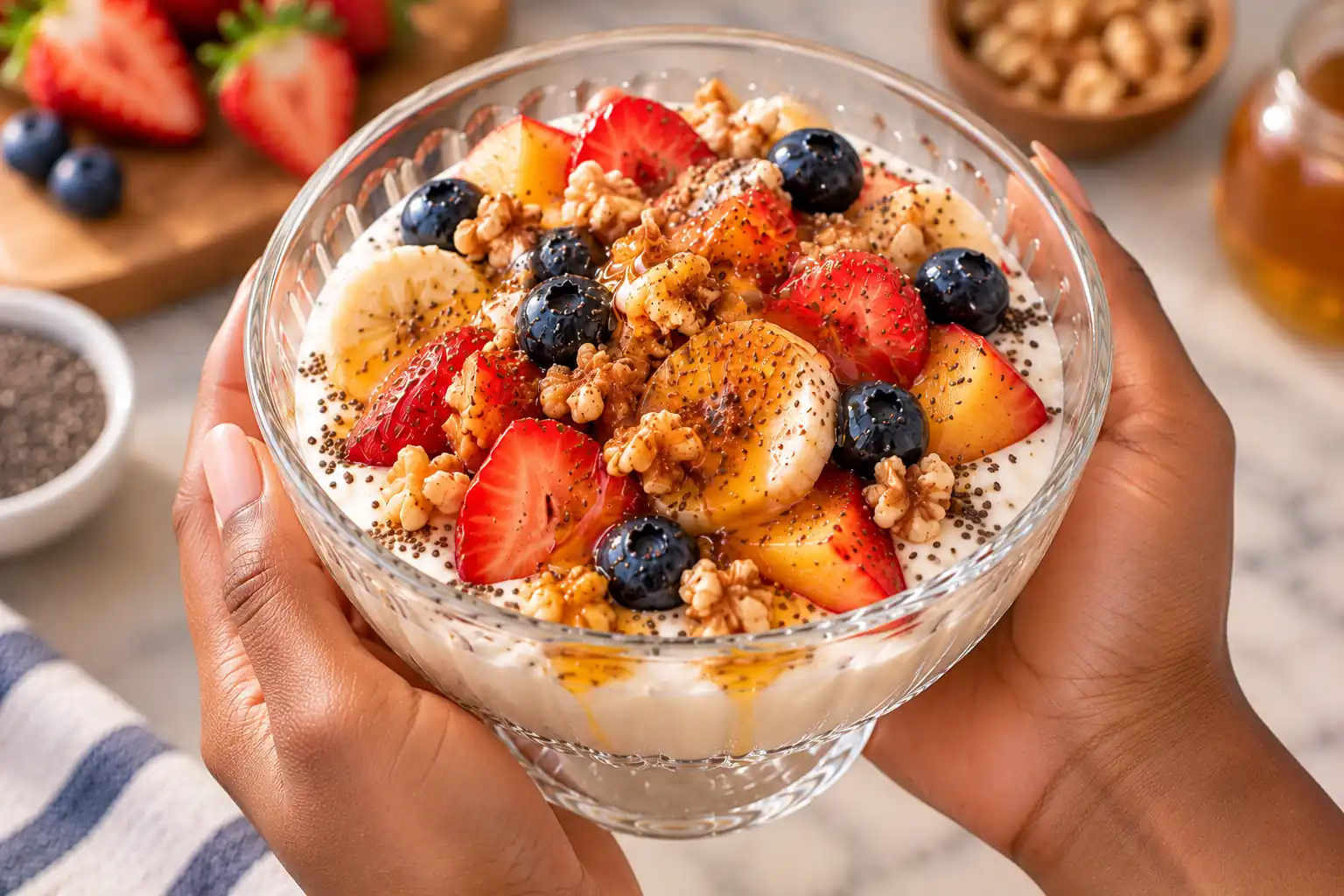
Plain Greek yogurt with fresh fruit and nuts is a quick breakfast or snack that requires little preparation. The yogurt provides protein, fruit adds flavor and variety, and nuts contribute crunch and unsaturated fats.
Try sliced apples, berries, pears, or seasonal fruit. Add walnuts or almonds and, if you like, a little cinnamon. Plain yogurt lets the natural flavors come through and gives you more control over added sugar.
This is a flexible combination rather than a traditional recipe tied to a particular community. Choose a yogurt that suits your dietary needs, and adjust the portion to your appetite.
Get the full recipe: Greek Yogurt with Fresh Fruit and Nuts
18. Vegetable and Herb Frittata
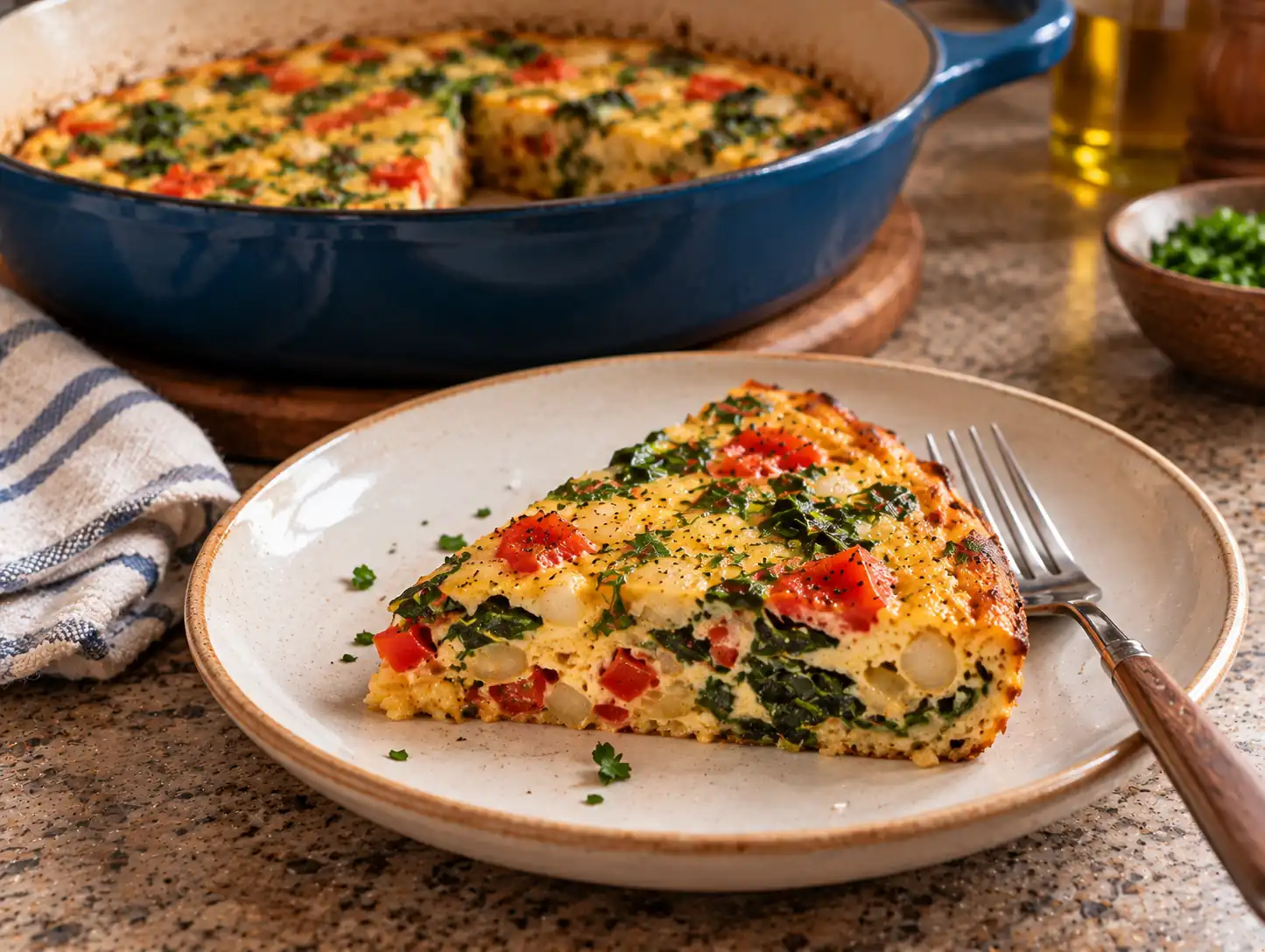
A frittata offers a practical way to use eggs and vegetables in one dish. Whisk the eggs, fold in chopped vegetables and herbs, then cook gently until the mixture is set.
Spinach, onions, tomatoes, peppers, and mushrooms all work well. The exact combination depends on what you have available, and leftover cooked vegetables can make preparation even quicker.
Serve a slice with a salad or whole-grain bread. It can work for breakfast, lunch, or a light dinner, so it is useful when you want a meal that does not depend on a fixed time of day.
Get the full recipe: Vegetable and Herb Frittata
19. Whole-Grain Toast with Avocado and Tomatoes
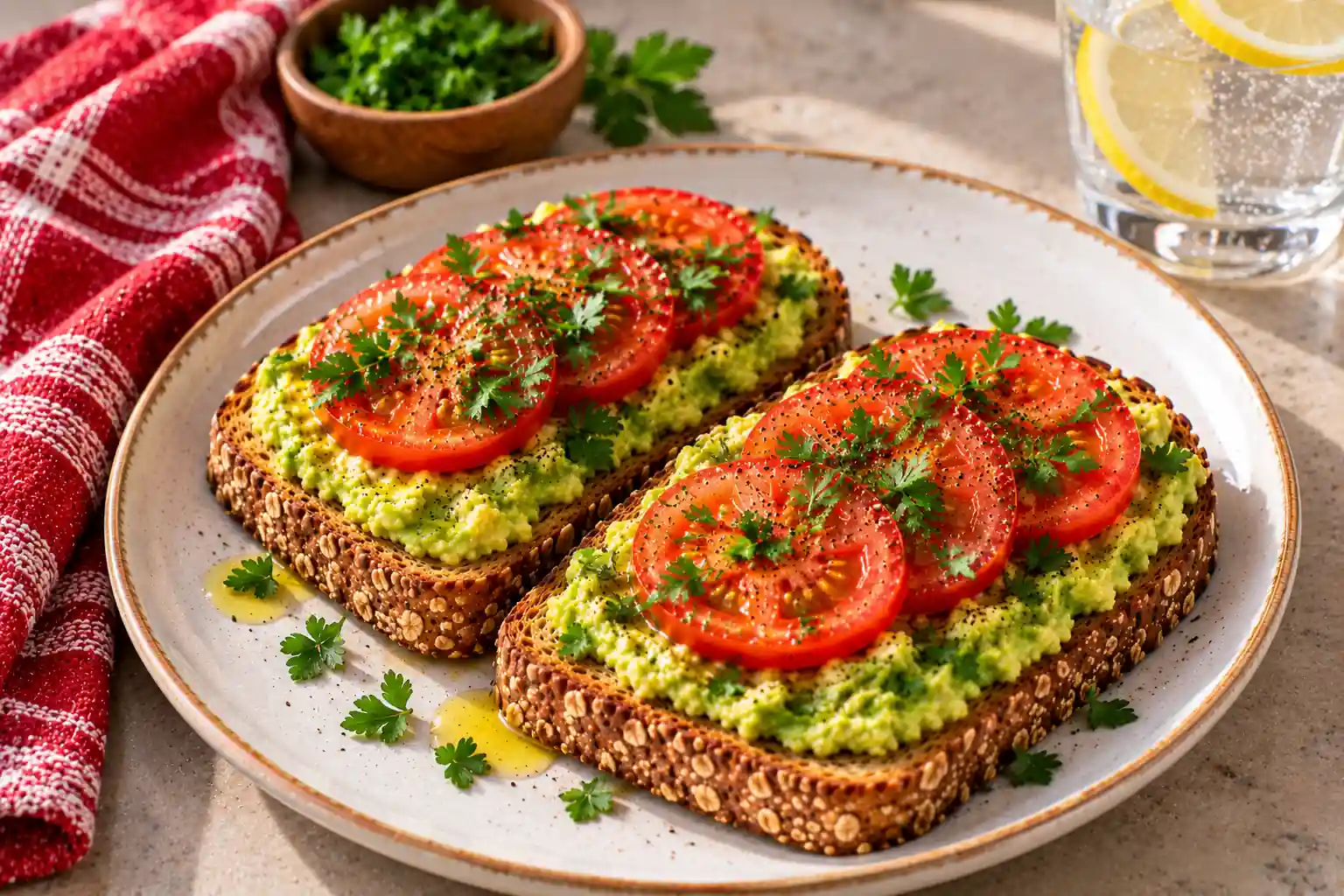
Whole-grain toast topped with avocado and tomatoes is simple, quick, and easy to adjust. Mash the avocado onto toasted bread, add sliced tomatoes, and finish with black pepper, herbs, or a squeeze of lemon.
The whole-grain bread provides fiber, while the avocado contributes unsaturated fat. Tomatoes add freshness and color. If you want a more substantial meal, serve it with an egg or a side of beans.
This is best prepared just before eating, while the toast is crisp. It is a useful reminder that everyday meals do not need long ingredient lists to be satisfying.
Get the full recipe: Whole-Grain Toast with Avocado and Tomatoes
20. Warm Cinnamon Apple and Oat Bowl
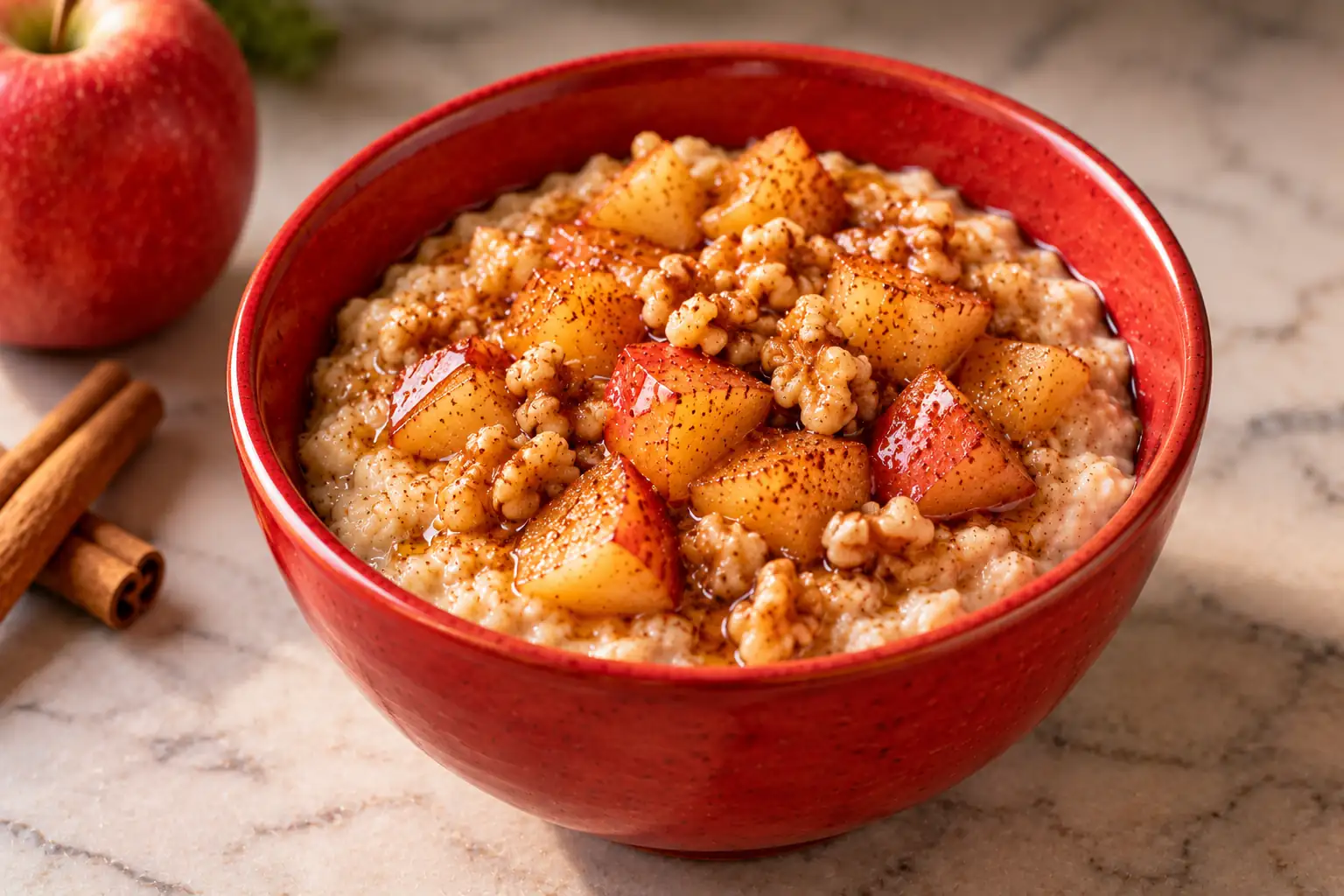
Warm apples and oats make a comforting breakfast, especially when the weather calls for something hot. Cook oats until tender, then add chopped apple and cinnamon. Allow the apple to soften, or cook it separately if you prefer more texture.
The apple adds sweetness and flavor, while oats provide a whole-grain base. You may not need much additional sweetener, depending on the apple and your taste.
Add nuts or plain yogurt if you want more texture or protein. This bowl also works as a simple afternoon meal when you want something warm and easy to prepare.
Get the full recipe: Warm Cinnamon Apple and Oat Bowl
21. Lentil and Tomato Pasta
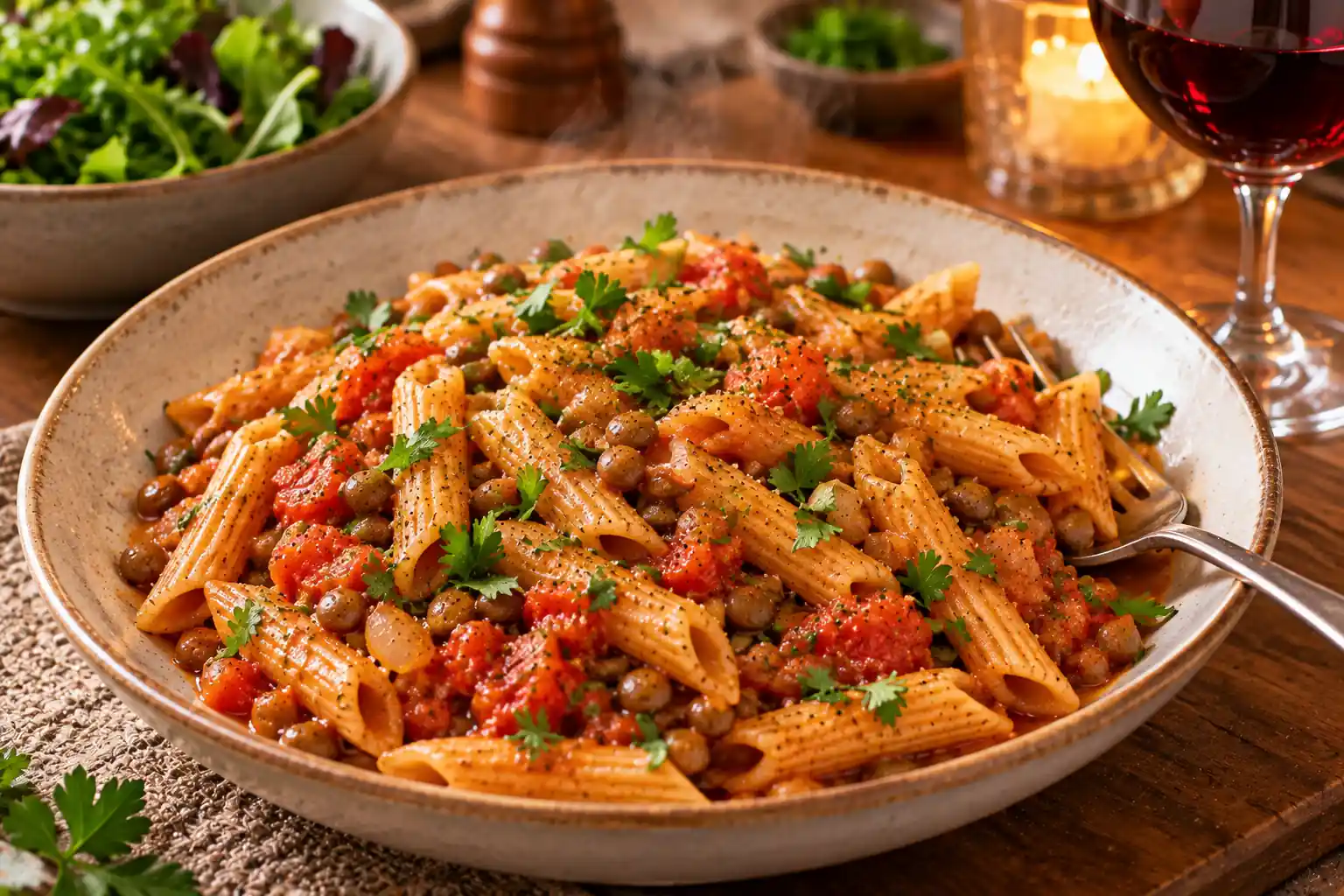
Lentils and tomatoes make a hearty sauce for pasta. Cook the lentils until tender, simmer them with tomatoes, onions, garlic, and herbs, then spoon the sauce over your chosen pasta.
The lentils give the sauce body and add plant protein and fiber. The tomatoes provide acidity, while the herbs bring familiar Mediterranean flavors.
This is a practical alternative to a meat-based sauce, though it does not need to imitate one. Make a larger batch of the lentil sauce if you want to use it for another meal with grains or vegetables.
Get the full recipe: Lentil and Tomato Pasta
22. Black Bean and Sweet Potato Stuffed Peppers
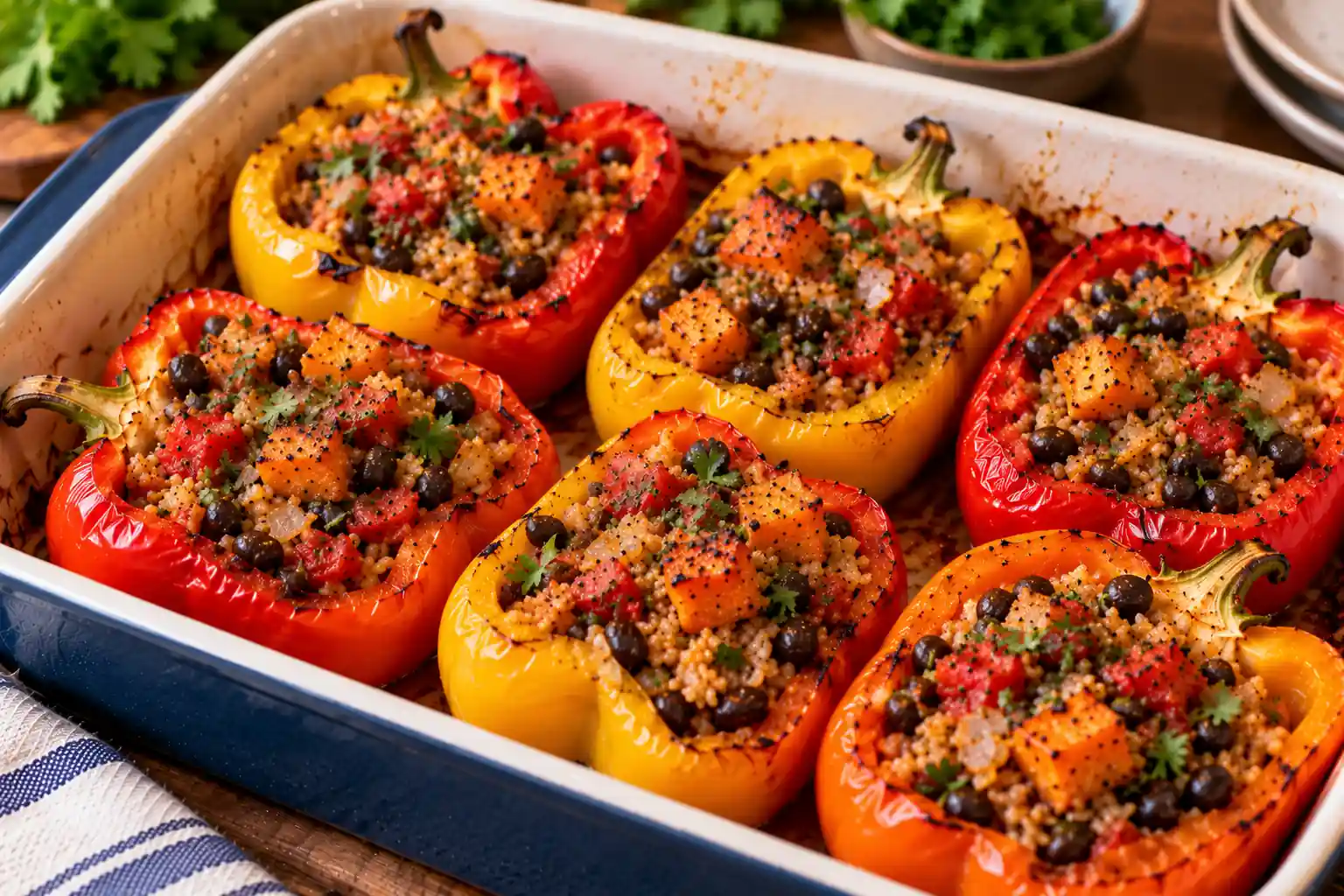
Sweet potatoes and black beans create a filling for bell peppers that combines soft, hearty ingredients with the sweetness of roasted vegetables. Mix the cooked filling with seasonings, spoon it into the peppers, and bake until the peppers are tender.
The beans contribute plant protein and fiber, while the sweet potato adds color and a different texture. Tomatoes, onions, or herbs can help bring the filling together.
Serve the peppers with a green salad or a small portion of whole grains. The recipe is easy to adapt, making it a useful choice for a meat-free dinner.
Get the full recipe: Black Bean and Sweet Potato Stuffed Peppers
23. Chickpea, Tomato and Vegetable Stew
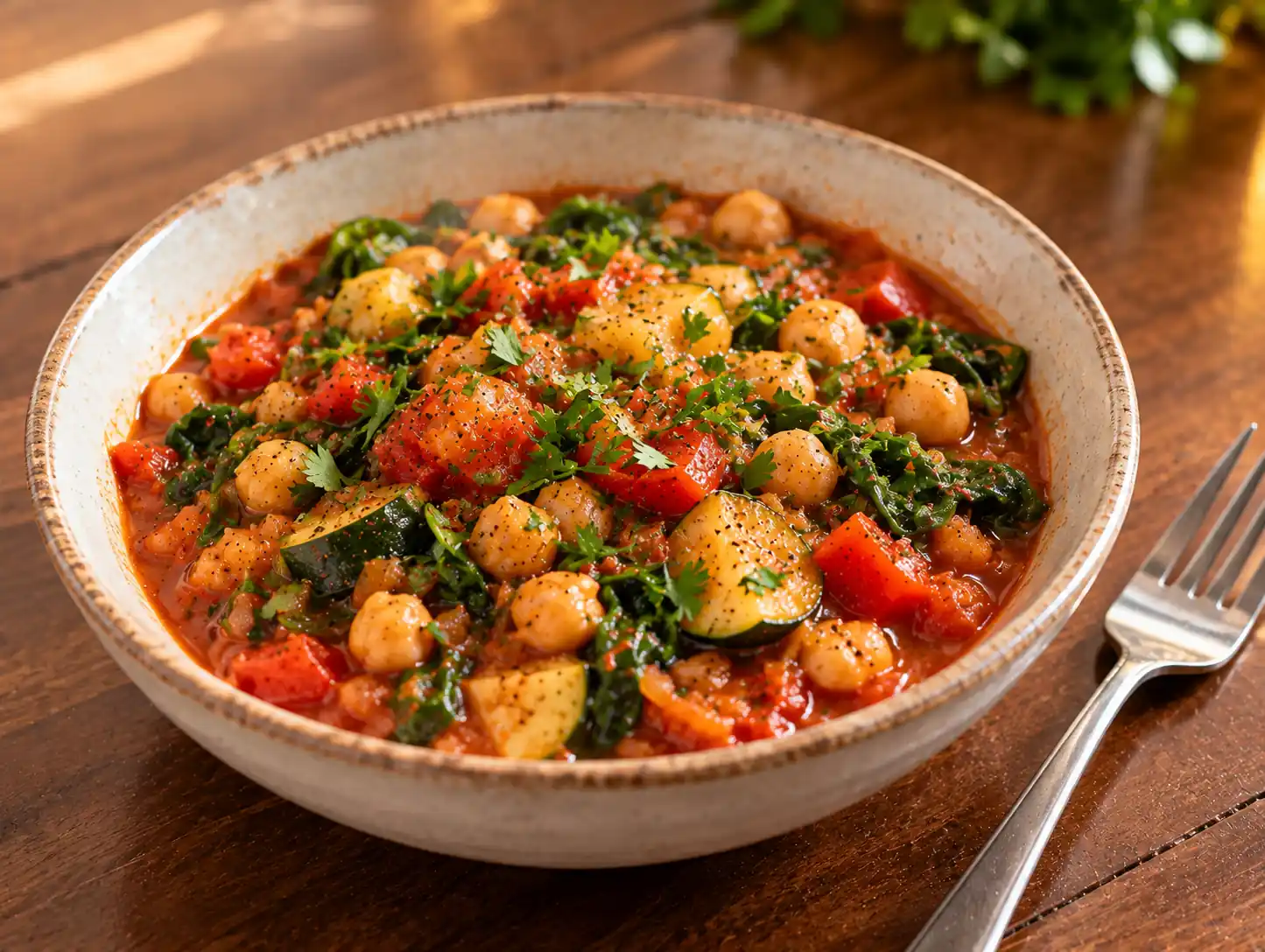
Chickpeas work well in a stew because they hold their shape while absorbing the flavors of the cooking liquid. Simmer them with tomatoes, onions, garlic, and vegetables until everything is tender.
Use spices and herbs according to your preference. Carrots, peppers, and leafy greens can all fit, depending on the style of stew you want to make.
Serve it on its own or over brown rice or another grain. It is a useful recipe for anyone trying to make legumes a regular part of their meals without relying on the same bean dish every week.
Get the full recipe: Chickpea, Tomato and Vegetable Stew
24. Tofu, Vegetable and Brown Rice Bowl
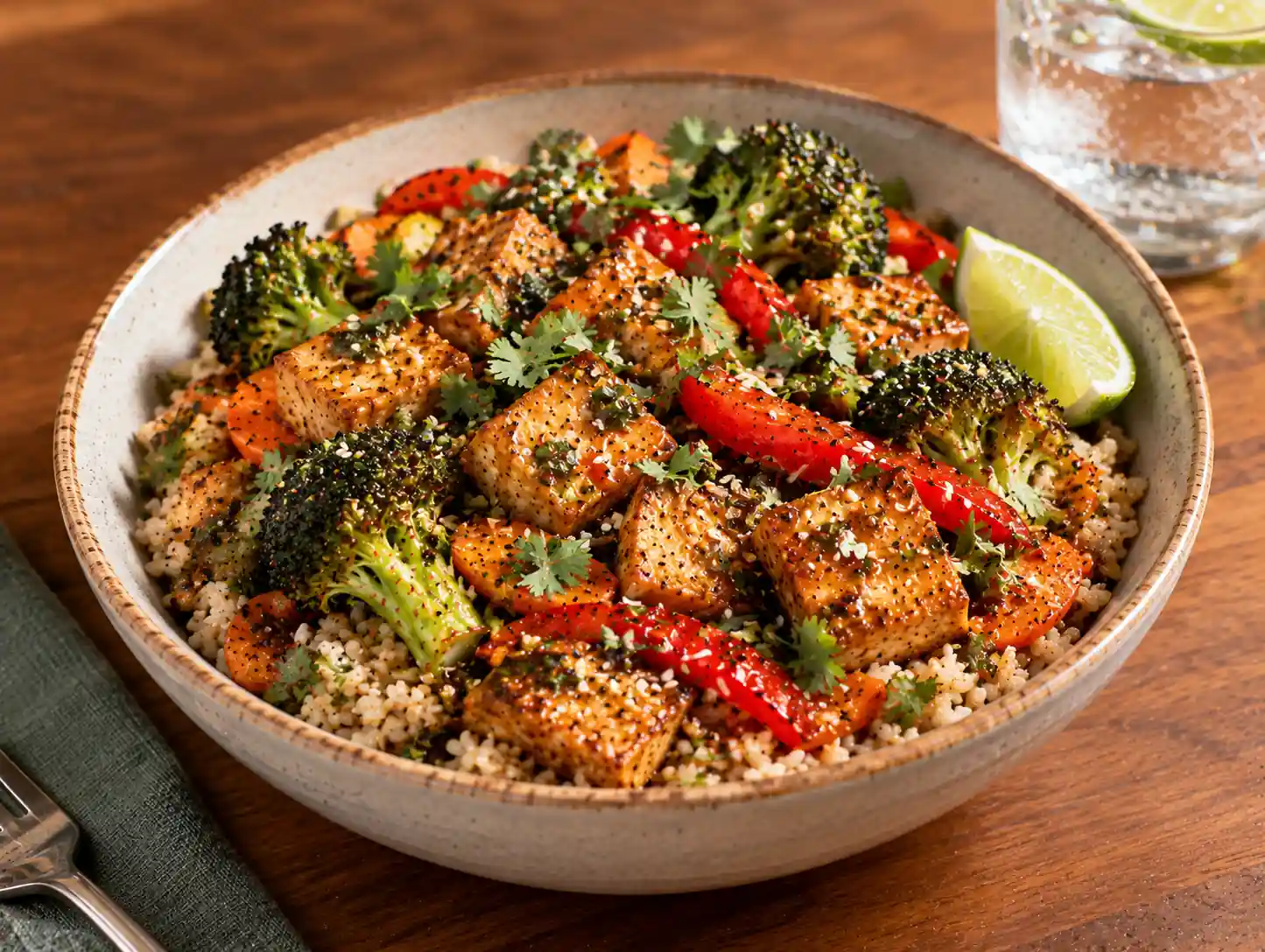
Tofu takes on the flavors of its seasonings and works well with vegetables and grains. Cook the tofu until lightly browned, stir-fry vegetables such as mushrooms, peppers, and bok choy, then serve everything over brown rice.
A simple sauce made with suitable seasonings can bring the ingredients together. Adjust the salt and sweetness to your preference, and include different vegetables to vary the bowl throughout the week.
Tofu is widely used in Japanese and other East Asian food traditions, but this particular combination is a modern everyday bowl, not a claim to a traditional Okinawan recipe. It offers one practical way to combine plant protein, vegetables, and whole grains.
Get the full recipe: Tofu, Vegetable and Brown Rice Bowl
25. Fish with Herbs, Vegetables and Whole Grains
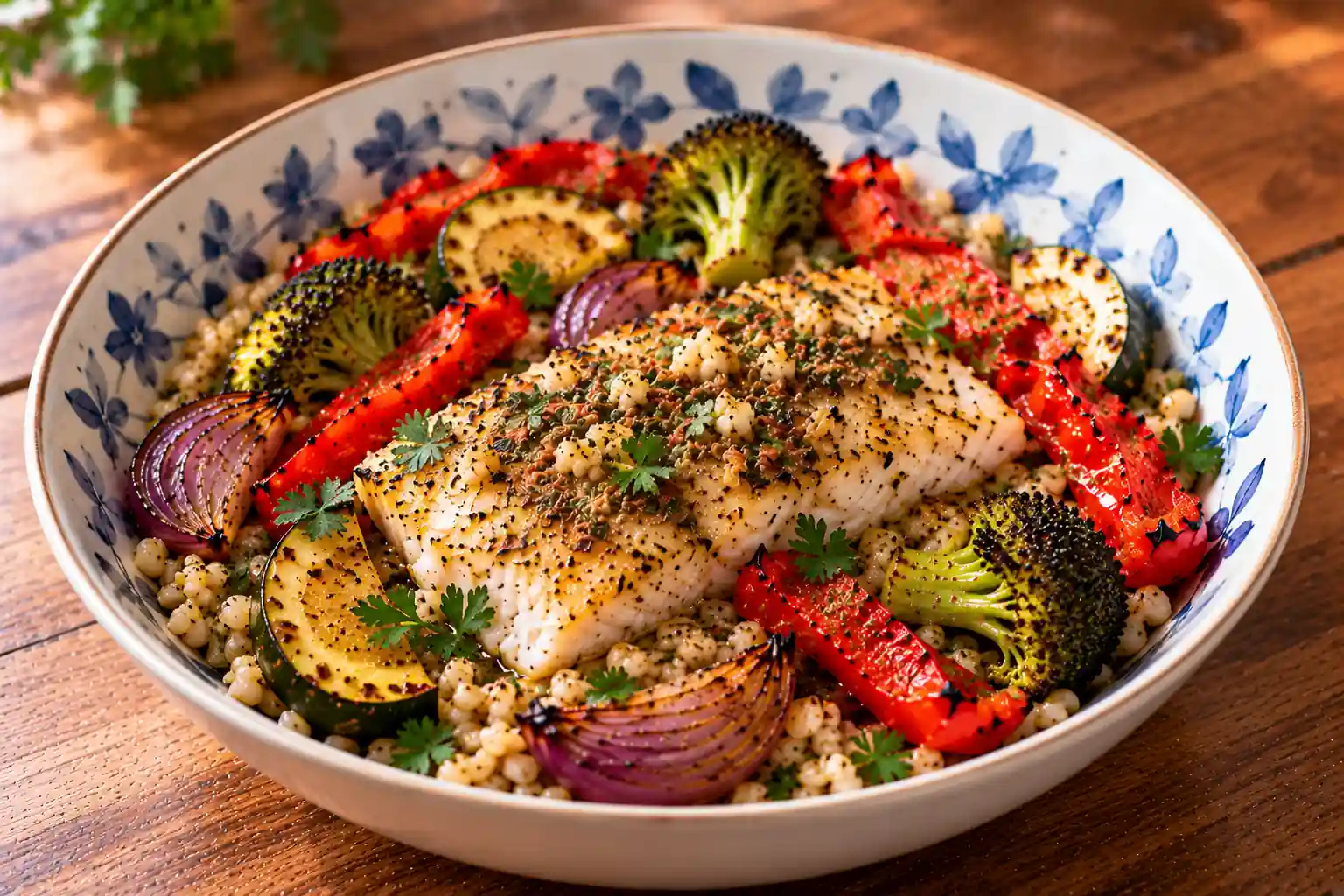
A meal of fish, vegetables, and whole grains brings several food groups together without complicated preparation. Season the fish with herbs, lemon, and a little oil, then bake or grill it until cooked through. Serve with vegetables and a grain such as barley or brown rice.
Fish supplies protein, and some types provide omega-3 fatty acids. The amount varies by species, so the type of fish matters. Vegetables and whole grains complete the meal and add variety.
This is a flexible dinner rather than a recipe tied to one specific region. Choose fish that is available and appropriate for your budget, and follow safe food-handling and cooking practices.
Get the full recipe: Fish with Herbs, Vegetables and Whole Grains
What These Recipes Have in Common
The recipes differ in flavor, texture, and preparation, but several practical themes run through the collection.
- They make room for plant foods. Beans, lentils, chickpeas, vegetables, fruits, nuts, and whole grains appear throughout the list. These foods provide a range of nutrients and help make meals varied.
- They rely on familiar ingredients. Many recipes use pantry staples such as dried or canned beans, oats, brown rice, tomatoes, and whole-grain pasta. Fresh vegetables, herbs, and seasonings help change the flavor without requiring a completely new shopping list each time.
- They offer more than one way to eat well. Some readers may prefer a warm bowl of soup. Others may choose a fresh salad, a breakfast bowl, a tofu stir-fry, or fish with vegetables. A useful collection should make room for different tastes and routines.
- They can be adapted. You can use seasonal vegetables, swap one grain for another, or choose beans that are available locally. A recipe is a starting point, not a rule that must be followed without adjustment.
- They are not a promise of longer life. A healthy diet can support overall health, but longevity depends on many interacting factors. The recipes are practical meal ideas, not treatments or guarantees.
How the Five Blue Regions Approach Everyday Food
Sardinia, Okinawa, Ikaria, Loma Linda, and Nicoya have different histories, ingredients, and food traditions. They should not be treated as five versions of the same diet.
Research into these populations has examined dietary patterns alongside other possible influences on health and longevity. A review of the evidence cautions that we should not assume a particular food or diet explains why people in a place live longer. Read the scientific review of diet and longevity.
The regions can still offer useful perspectives on everyday eating, provided we respect their differences.
Sardinia
Sardinia is an Italian island with varied regional food traditions. Some traditional meals use beans, vegetables, grains, herbs, and locally produced foods. The island's food culture is not uniform, and what people eat varies by area, generation, and circumstance.
For everyday cooking, the useful takeaway is not to reproduce an entire Sardinian menu. It is to make room for simple meals built around vegetables, legumes, grains, and other foods that suit your household.
The white bean stew, lentil and tomato pasta, and vegetable-based dishes in this collection offer modern ways to use some broadly familiar Mediterranean ingredients. They should not be mistaken for documented traditional Sardinian recipes.
Okinawa
Okinawa is part of Japan and has its own food history and regional traditions. Foods such as soy products, vegetables, and sweet potatoes have featured in discussions of traditional Okinawan eating, although dietary habits have changed over time.
The tofu, vegetable, and brown rice bowl in this collection is a modern meal that uses ingredients familiar in East Asian cooking. It is not presented as an authentic traditional Okinawan dish.
The broader lesson is to consider how plant foods can form a regular part of meals while allowing for local ingredients, preferences, and changing food cultures.
Ikaria
Ikaria is a Greek island whose food traditions sit within the wider diversity of Greek and Mediterranean cooking. Legumes, vegetables, herbs, and olive oil are useful ingredients to consider when preparing meals that draw on this broad culinary tradition.
The white bean and tomato stew, chickpea salad, and lentil soup in this collection use familiar Mediterranean ingredients. These are modern recipes, not claims to traditional Ikarian dishes.
The practical lesson is simple: a meal built around beans, vegetables, and herbs can be accessible, satisfying, and easy to adapt.
Loma Linda
Loma Linda is a community in California often discussed in research on health and lifestyle. Its residents do not all follow the same diet, and it would be misleading to treat every meal eaten there as part of one uniform food tradition.
Plant-forward eating is relevant to some of the dietary practices associated with parts of the community. The bean bowls, vegetable dishes, oats, and grain-based meals in this collection offer practical ideas for people who want to include more plant foods in their own routines.
These recipes are modern meal ideas. They are not presented as official Loma Linda dishes or as proof that a particular food causes longevity.
Nicoya
The Nicoya Peninsula is in Costa Rica and has a distinct local food culture. Beans and corn-based foods have long been important in many Costa Rican meals, alongside other ingredients that vary with household, region, and time.
The black bean bowls and other legume-based dishes in this collection offer modern ways to use familiar ingredients. They should not be treated as exact reproductions of traditional Nicoyan meals.
A useful starting point is to consider how everyday staples can be combined into satisfying meals, using foods that are available and familiar to you.
- Choose two recipes for the coming week. One soup or stew and one quick meal, such as a grain bowl or salad, can give you some variety without making meal planning complicated.
- Keep useful staples on hand. Beans, lentils, oats, brown rice, whole-grain pasta, canned tomatoes, and basic seasonings can make it easier to prepare a meal when you have little time.
- Cook components ahead when it helps. A pot of beans, cooked grains, or a tray of roasted vegetables can become the base for more than one meal. Store cooked foods safely and refrigerate leftovers promptly.
- Use what is available. Frozen vegetables, canned beans, seasonal produce, and locally available grains can all help make meals practical. Rinse canned beans if you want to reduce some of their added sodium.
- Adjust recipes to your needs. Food preferences, allergies, cultural traditions, medical needs, and household budgets vary. Choose ingredients and portions that suit you. If you need a therapeutic diet for a medical condition, follow advice from a qualified health professional.
- Build a collection of meals you enjoy. If one recipe works well, keep it in your rotation. Change the vegetables or seasonings when you want something different. The goal is not perfect eating every day. It is to make nourishing choices easier to repeat.
How to Make These Longevity Recipes Part of Your Routine
You do not need to prepare all 25 recipes or change every meal at once. Start with a few that fit your schedule and the ingredients you can easily get.
A Practical Note on Food, Healthy Aging and Longevity
Healthy aging is influenced by more than diet. Physical activity, sleep, genetics, social relationships, healthcare, living conditions, and other factors also contribute to health across a lifetime.
Research can identify associations between dietary patterns and health outcomes, but that does not mean a specific recipe will extend your life. Nor does it mean that everyone in a region eats the same way or enjoys the same health outcomes.
The recipes here are intended to make everyday cooking easier and more varied. They emphasize foods that can fit into a balanced eating pattern, including legumes, vegetables, fruit, whole grains, nuts, and suitable sources of protein.
For further reading, consult the World Health Organization's healthy-diet guidance, the American Heart Association's overview of Mediterranean-style eating, and the scientific review on diet and longevity in long-lived populations. These sources provide broader context for the food choices discussed here.
Conclusion: Start with Simple, Everyday Meals
Eating well does not have to begin with a complete change in your kitchen. It can start with a pot of lentil soup, a chickpea salad, oats for breakfast, or a bowl of vegetables and whole grains.
The food traditions of Sardinia, Okinawa, Ikaria, Loma Linda, and Nicoya are different. They do not offer a single formula for a long life. They do, however, provide useful reasons to pay attention to everyday food, while recognizing that health and longevity depend on more than what is on the plate.
Choose a recipe that appeals to you. Try it this week, adjust it to suit your household, and keep the meals that work for you.
You do not need one perfect recipe. You need a collection of good meals you can return to.